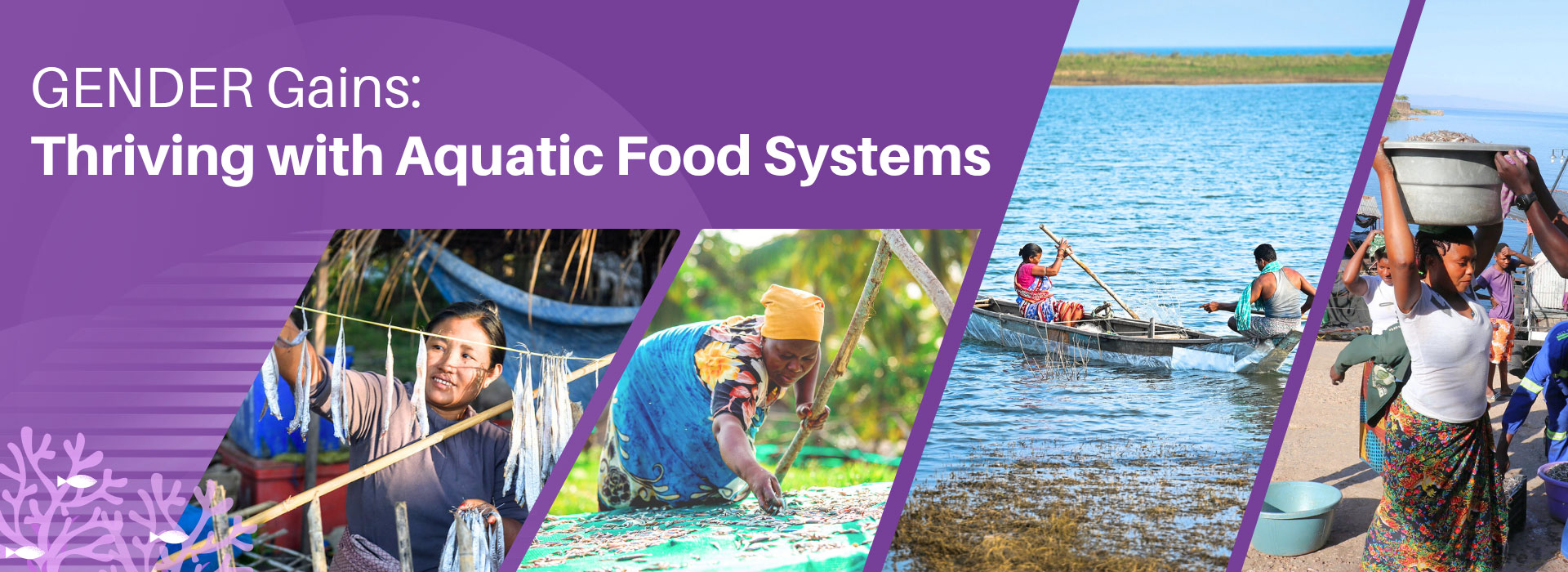
“If you want to go fast, go alone. If you want to go far, go together”
Past year, the above African proverb defined our efforts as we, together with our donors, partners, collaborators, and colleagues, advanced research, policy development, and capacity strengthening across Africa, Asia, and the Pacific. By investing in listening, dialogue and co-creating with communities, researchers, and policy makers, we made inroads into tackling the persistent challenge of gender inequities in fishing communities, contributing to strengthening their livelihoods and improving access to nutrition.
This second issue of GENDER Gains brings these stories to life through experiences from Bangladesh, Tanzania (Zanzibar), Mozambique, Malaysia, India, and Kenya. The stories span pond-based aquaculture innovation in Bangladesh and women-led fish value addition in India to skills exchange among seaweed farmers of Mozambique and Zanzibar, the invisible women in gleaning systems with Mozambique as a case study, and a first-time ever gender-sensitized policy in Kenya’s Lake Victoria region. Together, they demonstrate inclusive approaches that are strengthening livelihoods, resilience, and equity across diverse aquatic food systems.
As we look ahead, we are excited that 2026 has been designated the International Year of Women Farmers!For WorldFish, this moment resonates deeply with our work across aquatic food systems, where women farmers, fishers, processors, and traders are central to production, nutrition, and community resilience. This year offers a critical opportunity to elevate women’s voices, make their contributions visible, and accelerate gender-responsive and gender-transformative action across fisheries and aquaculture.
In the spirit of the African proverb, we invite you to join us in collectively being deliberate to incorporate evidence, co-creation, mentorship, and accountability in our work, as investing in people is as crucial as technologies to bring about a transformation of aquatic food systems, so they are productive, climate-resilient, and truly inclusive.
– Rahma Adam, Senior Scientist and Social & Economic Inclusion Impact Area Lead, WorldFish
Country Program Highlights
Women find new opportunities in coastal ponds in Bangladesh
By Sharmin Rezwana
Demand for nutrient-rich aquatic foods such as seaweed and bivalves is growing in Bangladesh, driven by changing diets, tourism in Cox’s Bazar and Chattogram, and longstanding consumption among ethnic communities. Yet domestic production remains limited from gap in technical knowledge and skills.
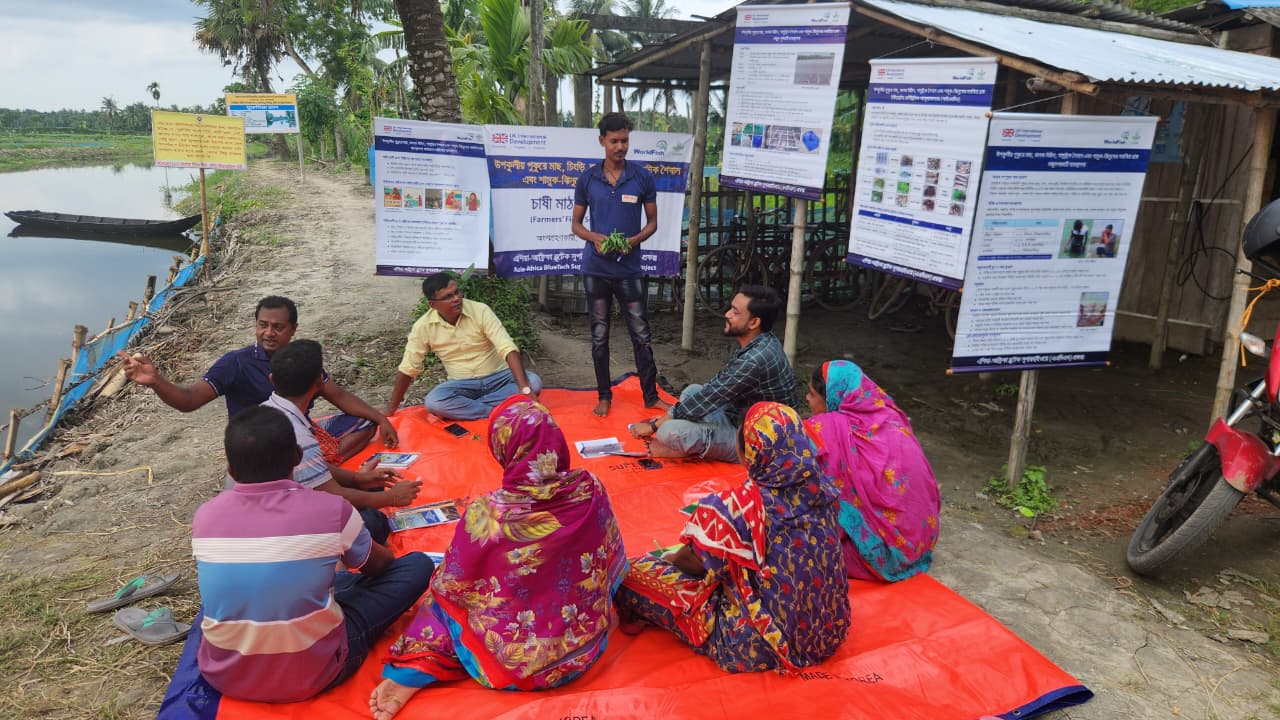
WorldFish engaged 96 farmers including 21 women in Cox’s Bazar and Khulna through Farmer Field School (FFS) to introduce them to innovative pond-based Integrated Multi-Trophic Aquaculture (IMTA). IMTA, an approach that combines finfish, shrimp, and prawn with lower-trophic species such as seaweed and bivalves, is an environmentally friendly pathway that recycles nutrients, improves water quality, and diversifies income. Through July to September 2025, many of these farmers experienced nature-based aquaculture for the first time.
Field Farmer School in session in Cox’s Bazar, Bangladesh
A prior training-of-trainers imparted gender-sensitized learning approach, along with technical skills on pond preparation, stocking, feeding, nutrient recycling, and basic financial planning. Through demonstration ponds, open discussions and peer-to-peer learning over the four-month culture period, all participating farmers successfully learnt and transitioned from traditional single-species farming to IMTA.
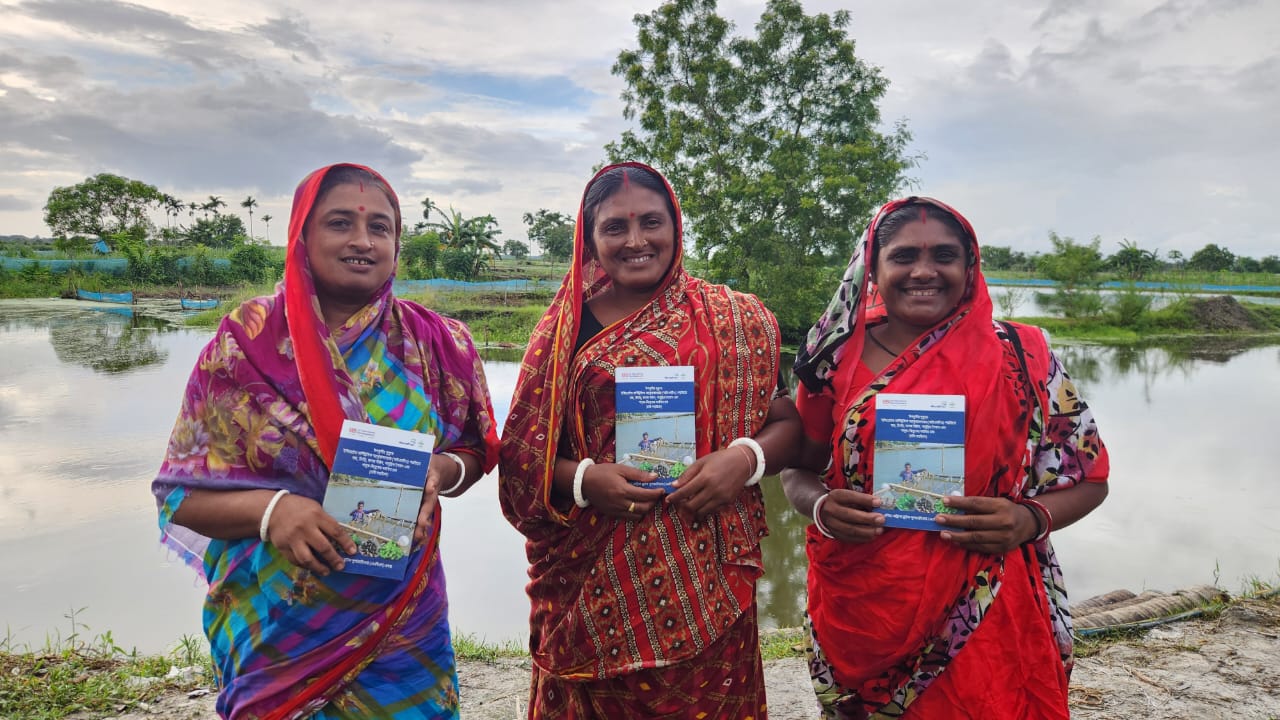
Women farmers successfully complete training and switch to IMTA farming
To overcome the additional barriers that women encountered relating to literacy and time constraints, the training leveraged inclusive tactics, such as more frequent field visits, visually based training materials, practical demonstrations, and suitable timings, allowing women farmers to fully participate and benefit from the IMTA technology.
As demand for seaweed and bivalves continues to grow, similar gender-responsive Farmer Field Schools can help accelerate adoption of sustainable aquaculture practices, inclusively building resilience of vulnerable coastal communities while keeping ecological balance in the face of climate change.
A Mozambique-Tanzania seaweed learning visit upskills and empowers women and youth
By Dilruba Sharmin, Siwema Luvanga and Helena Salencia
To bolster skills development through peer-to-peer exchange, under the auspices of the Asia–Africa BlueTech SuperHighway (AABS) project, WorldFish organized a learning visit for women and youth from Mozambique to visit seaweed farmers in Zanzibar. Leveraging South-South collaboration, the visit strengthened the capacity of a Mozambican cooperative in seaweed post-harvest management and marketing of products through hands-on learning from Zanzibar’s farmers. Read more
Understanding vulnerabilities and influencing change in Malaysian fishing communities
By Surendran Rajaratnam, National University of Malaysia
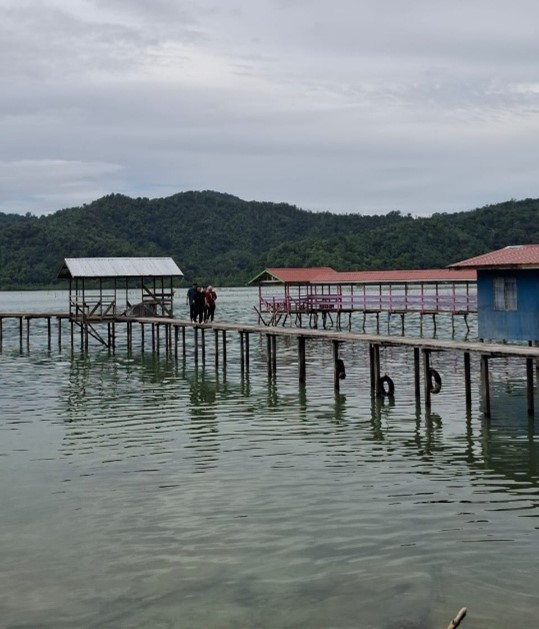
Fishing communities in Malaysia are witnessing effects of climate change, sometimes damaging an entire harvest. A sea cucumber farmer in the state of Sabah shared: “If the wind is strong, it can cause our cages to collapse—but it isn't just the waves we worry about. Sometimes, extreme heat is even worse; if the weather stays hot for a few weeks, the sea cucumbers will be affected. We’ve even had situations where the waves wiped out the entire community's cages ... there wasn't a single sea cucumber left inside.”
Kampung Baru-Baru, Kota Belud, Sabah, Malaysia.
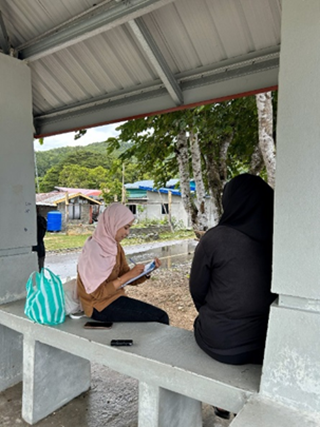
Interview with an informant in the community, Sabah, Malaysia. Photos: Surendran Rajaratnam, National University of Malaysia
With little alternative sources of income, these vulnerabilities are driving people from coastal communities, especially the youth, to seek safer havens of urban areas for sustainable livelihoods.
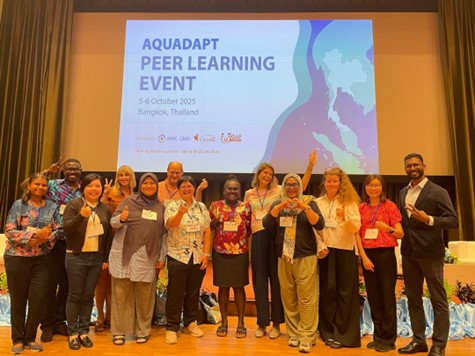
The Climate-adaptive, Inclusive, Nature-based Aquaculture (CAINA) project is working with communities to explore more resilient food systems that are nature-positive and able to provide nutritious food and sufficient incomes. As part of Canadian-funded AQUADAPT initiative, CAINA aims to define such solutions for the Asia-Pacific region.
A series of collaborative workshops and meetings developed a Gender Equality and Social Inclusion or GESI Action Plan to guide CAINA’s implementing partners in their research and site-specific studies. The GESI workshops, organized by AQUADAPT and the National University of Malaysia, provided a platform for sharing principles in social science research, as well as considerations for GESI with partners who are predominantly from the fisheries and aquaculture sciences. The outcomes from these workshops aim to change researchers’ approach in working with communities, so it is inclusive and responsive to diverse needs of people while also cascading down capacities across partners on GESI.
“I learned a lot in terms of social approach in doing GESI research, such as probing technique as well as carefully considering every aspect and element in applying GESI concepts,” said one of the fisheries science researchers.
In 2026, CAINA will apply GESI approaches to engage diverse stakeholders including community representatives, NGOs, and government agencies to enhance our understanding of challenges coastal communities face to be able to influence change inclusively.
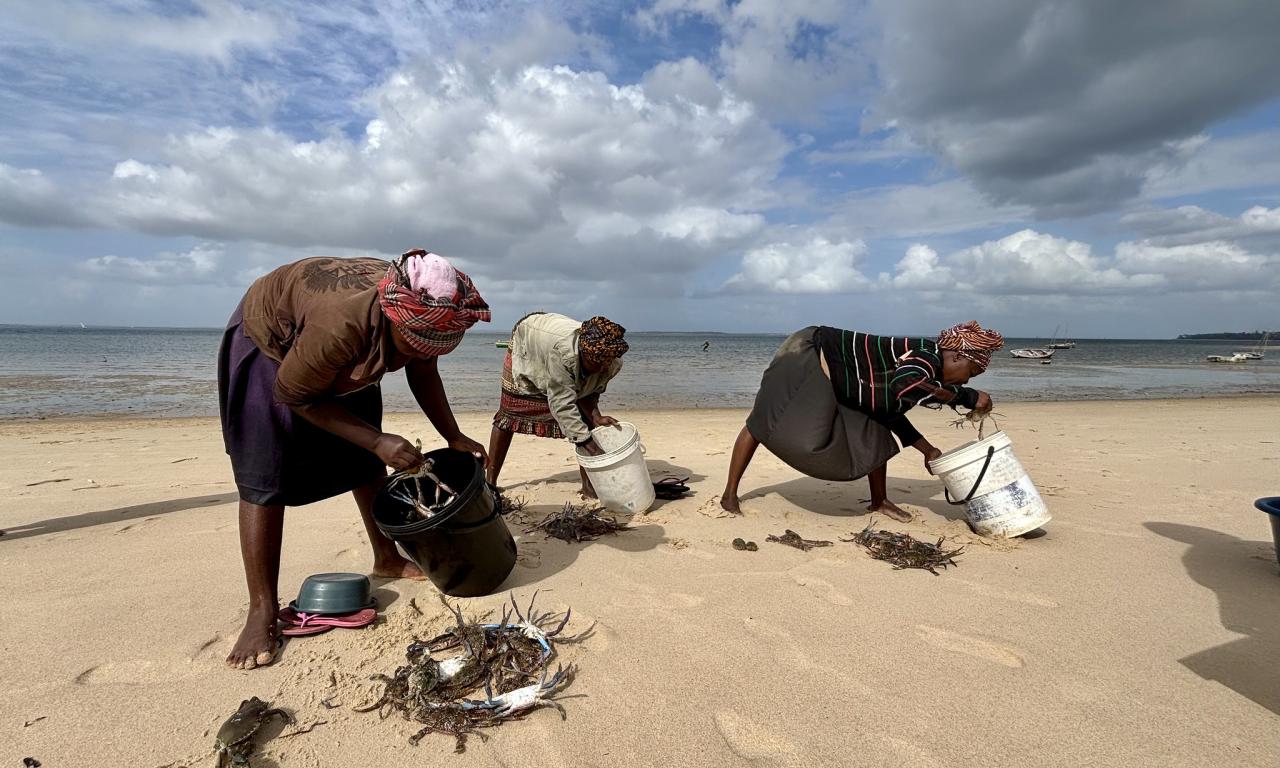
Spotlight on women’s hidden labor: Gleaning in Mozambique
By Sara Bonilla Anariba and Helena Salencia
Gleaning is hard work, grueling, uncertain, and deeply undervalued but is a vital source of sustenance and income, feeding and nourishing families in coastal communities. After spending between six and eight hours searching and collecting crabs, clams, oysters, and other bivalves, the women then head home or to the shore, carrying their harvest.
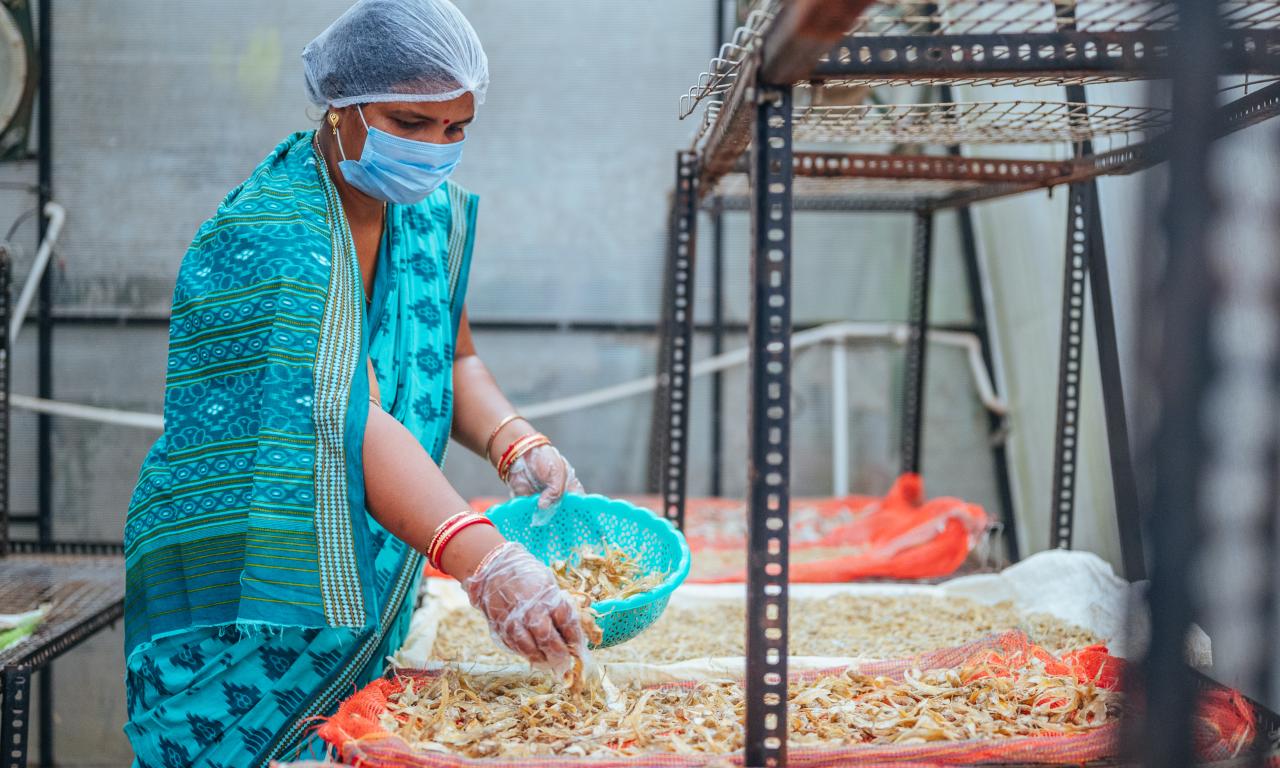
From traditions to triumph: Premalata’s success with solar-dried fish in Odisha
By Baishnaba Charan Ratha
Premalata Behera, a 40-year-old member of Maa Women Self Help Group and resident of the Dalimbapur fishing village, comes from a long line of coastal fishers in Odisha, India.
For generations, her community has relied on the dried fish trade as a vital source of income. However, Premalata and her group members faced persistent challenges running their dried fish business. Until they were introduced to solar drying of fish.
A Gender-Inclusive Fisheries and Aquaculture Policy Launched in Kenya’s Homa Bay County
By Florence Sipalla
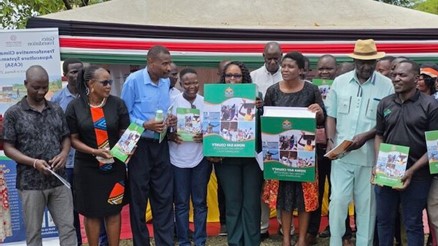
The launch of the Homa Bay Fisheries and Aquaculture Development Policy on World Fisheries Day, November 21, 2025. Photo: Danyell Odhiambo
In November 2025, Kenya’s Homa Bay County launched a Fisheries and Aquaculture Development Policy, aiming to unlock the many benefits of sustainably harnessing the waters of Lake Victoria for its fishing communities. The policy, an outcome of technical support from WorldFish and its close collaboration with the county’s Department of Fisheries over three years, enshrines a gender-sensitive framework designed to leave no one behind.
“The policy marks a strategic shift from reliance on capture fisheries toward sustainable aquaculture, easing pressure on Lake Victoria’s wild stocks while creating inclusive economic opportunities,” says Dr. Rahma Adam, the technical lead on the policy and Social and Economic Inclusion Impact Area Lead at WorldFish.
The policy establishes a clear legal framework for cage and pond farming, empowering smallholder farmers, youth, and women with better access to resources and technical support.
“Embracing these frameworks will allow Homa Bay County to sustainably improve fish production from the current 37,000 MT to up to 300,000 MT,” according to Dr. Adam.
The launch of the Homa Bay Fisheries and Aquaculture Development Policy on World Fisheries Day, November 21, 2025. Photo: Danyell Odhiambo
“This policy is grounded in the principles of sustainability, equity, and innovation,” said Hon. Sarah Malit, County Executive Committee Member Blue Economy, Fisheries, Mining and Digital Economy, expressing pride at the policy launch event as it supports majority of the County residents who work in the fish value chain.
Prof. Dorothy Amwata, Dean School of Agriculture and Environmental Sciences at Murang’a University of Technology and Agustino Neto, a legal and policy expert, are some others who provided their technical input in formulating the policy’s frameworks.
As a next step, WorldFish and county officials will jointly develop a roadmap for executing the policy and mobilize additional partners, including private sector actors, donors, and NGOs, to support its implementation for sustainable and inclusive development of the sector. Read more
Co-Creating a Gender and Social Inclusion Learning Agenda for MENA Food Systems
By Rahma Adam
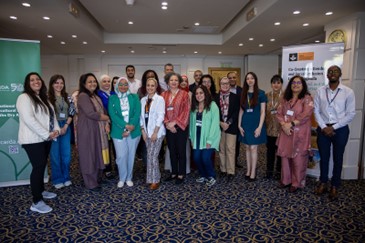
Participants at the CGIAR GESI workshop on co-creating a regional learning agenda for inclusive food, land, and water systems in the MENA region
In November 2025, the CGIAR Gender Equality and Inclusion (GEI) Accelerator, with active involvement from WorldFish, convened a regional workshop in Cairo, Egypt to co-create a Gender and Social Inclusion (GESI) Learning Agenda for Food, Land, and Water Systems in the Middle East and North Africa (MENA) region. The workshop responded to the region’s intersecting challenges of climate change, water scarcity, land degradation, conflict, displacement, and widening gender inequalities.
The two-day workshop brought together participants from CGIAR centres, international research institutes, civil society organisations, development agencies, and policy actors, creating a rare space for cross-regional and cross-sector dialogue. WorldFish contributed expertise from aquatic food systems, gender research, and policy engagement to the discussion.
The MENA region’s GESI Learning Agenda will provide a roadmap for investment in evidence generation, synthesis, communication and policy engagement to tackle the complex challenges in the region’s food, land and water systems, contributing to gender inequities. Read more
Women taking leadership strides in marine and coastal management in Solomon Islands
By Florence Sipalla
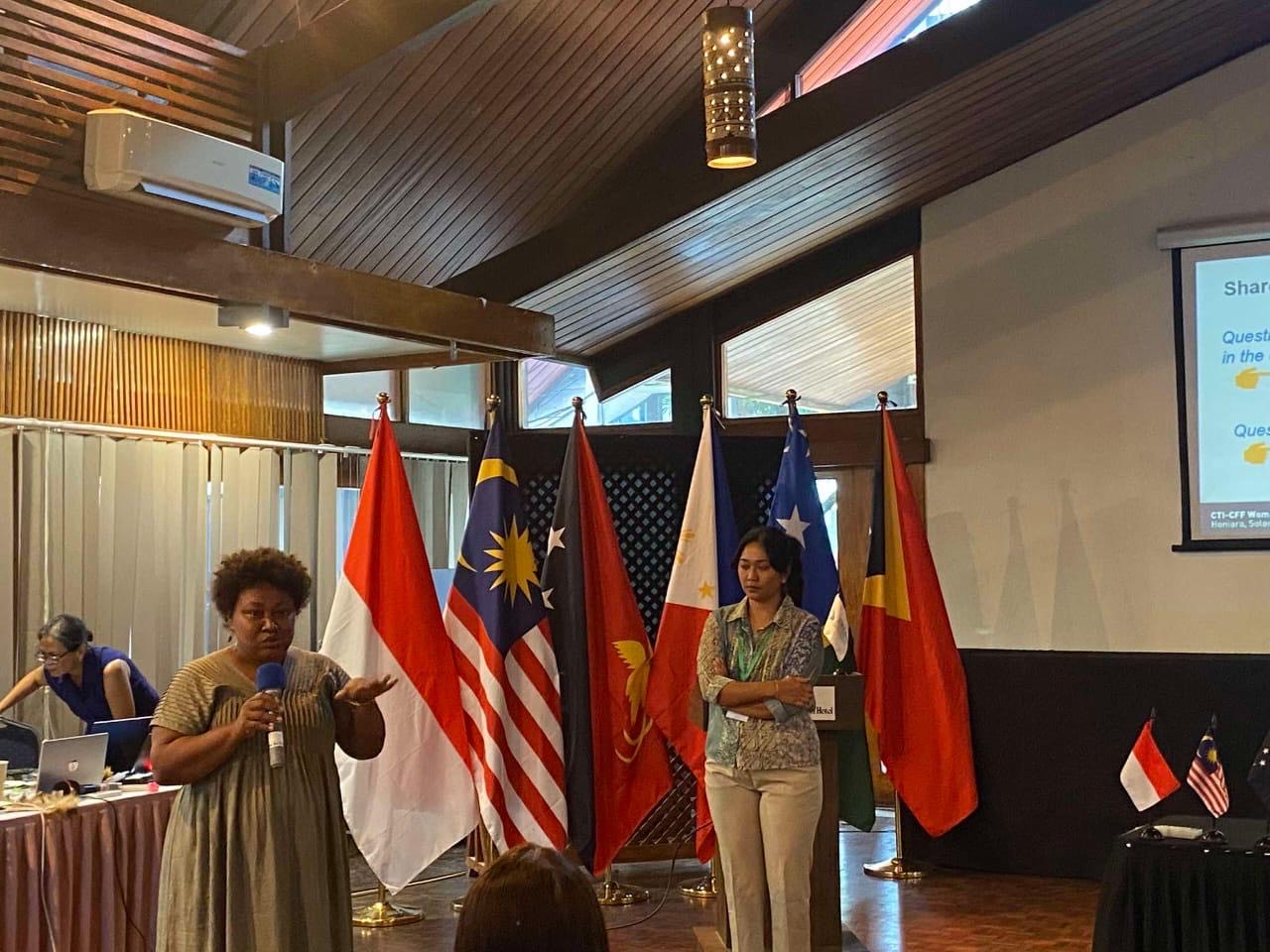
WorldFish’s Janet Saeni-Oeta speaking at the 2025 Women Leaders Forum in Solomon Islands.
Photo: Sharon Tohoimae, SPREP
In the recent past, the number of women in leadership positions in the Solomon Islands has been on an upward trend. According to the publication: Leadership Matters 2024: Benchmarking Women in Business Leadership in the Pacific, the level of women’s representation in leadership in the Pacific has gone up, recording an increase in women’s leadership across boards and in senior leadership positions.
WorldFish Solomon Islands Country Representative and gender expert Janet Saeni-Oeta was part of the 2025 Women Leaders Forum (WLF) Regional Exchange in Honiara, Solomon Islands, marking leadership milestones by women in the region. The event themed “Celebrating the Resilient Voyage of our Women Leaders,” highlighted the positive change since WLF’s inception in 2014. WLF is a peer learning network aimed at helping women take leadership roles in preserving and sustaining the region’s marine and coastal resources.
“Faith-based institutions play a key role in terms of elevating the status of women,” explains Saeni-Oeta. Highlighting that it is likely that if a woman is a leader in her church and resource management committee, she is vocal and visible within the community. “When I started in 2010 up until 2015, the leaders were all men. It is now changing,” she noted with pride.
Capacity Building & People
Emerging Gender Scholars Shaping Inclusive Aquatic Food Systems
By Rahma Adam
WorldFish is strengthening its commitment to gender equality and social inclusion through partnerships with early-career researchers whose work bridges rigorous evidence, lived realities, and policy relevance. This new emerging generation of scientists is advancing deeper understanding of how gender shapes participation, agency, and resilience across aquatic food systems.
Rethinking mariculture through a gender lens
Lucy Njogu is a Kenyan national, development economist and PhD student with the Norwich Institute of Sustainable Development, at the University of East Anglia. In collaboration with WorldFish, she is examining the role of mariculture in strengthening household wellbeing among coastal communities. As mariculture is increasingly promoted within the blue economy, her research asks critical questions about who participates, who benefits, and under what conditions outcomes are enhanced. Applying a gender-responsive lens, Lucy seeks to inform more inclusive, sustainable, and equitable mariculture interventions.
Understanding decisions at the frontline of climate change
Shanali Pethiyagoda a Sri Lankan PhD candidate in behavioural development economics with the Norwich Institute of Sustainable Development at the University of East Anglia. Her work is inspired by Zanzibar’s seaweed-farming communities and the history of its women seaweed farmers, who make up around 90 percent of producers.
Her research responds to growing climate pressures that threaten shallow-water seaweed farming systems. Women’s limited swimming skills have become a gender-specific barrier to adopting more climate-resilient deep-water technologies. Shanali explores how confidence, competition, deferred decision-making, risk perceptions, and social norms shape women’s decisions around swimming uptake. Her work aims to generate evidence that supports women’s agency and guides new research that can help designscalable, climate-adaptive interventions in similar coastal contexts.
Reframing empowerment as a journey
Afrina Choudhury, a Bangladeshi Canadian PhD candidate at Wageningen University and former senior gender specialist at WorldFish Bangladesh, brings over a decade of practice into her research. Her thesis conceptualises women’s empowerment in aquaculture as a dynamic, relational, and evolving process shaped over time.
Afrina aims to show how empowerment emerges through the interaction of resources, technologies, norms, institutions, and women’s own meaning-making. Her work calls for gender-transformative approaches that move beyond access to markets and technologies to address norm change, collective action, and institutional accountability.
Strengthening Women-Led Fish Value Addition Enterprises in Western Kenya
By Olive Molo and Rahma Adam
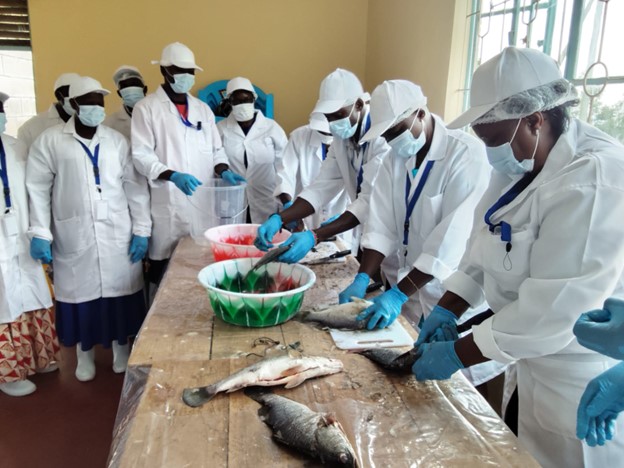
From 16–18 December 2025, the Africa Centre for Technology Studies (ACTS), in partnership with WorldFish, led training on fish value addition at Kakione Beach, Sindo, in Homa Bay County. The capacity building program trained 32 participants in total, including 22 women, who were small-scale fish processors, traders, and value-chain actors—predominantly from women-led and mixed enterprises operating across Homa Bay and Migori counties within the Lake Victoria fisheries system.
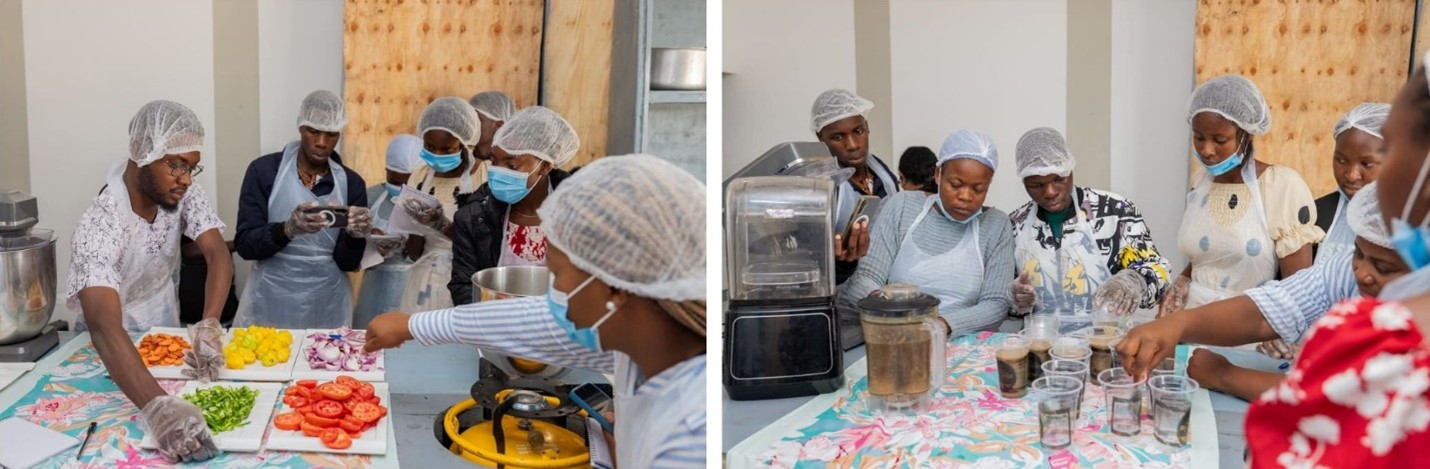
Participants being trained how to handle and process fish during the training. Photo: Catherine Kilelu, ACTS
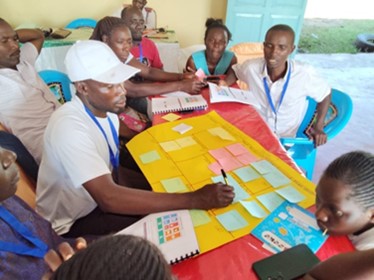
Participants use GALS visioning tools to reflect on enterprise growth, gender roles, and collective action. Photo: Catherine Kilelu, ACTS
The activity responded to persistent challenges faced by women in small-scale fisheries, including high post-harvest losses, limited access to improved processing technologies, weak compliance with food safety standards, and gender inequalities in enterprise ownership, decision-making, and benefit sharing.
The training covered improved fish smoking and solar drying technologies; food safety and quality assurance practices, from hygiene and Good Manufacturing Practices (GMPs) to packaging, labelling, and regulatory compliance; enterprise development; and gender-transformative learning. This integrated approach enabled participants to explore how technical practices, business decisions, and gender relations interact to shape enterprise performance, household wellbeing, and livelihood outcomes.
The training highlighted strong readiness among women-led enterprises to adopt improved technologies when learning is practical and participatory. Demand for smoking kilns and solar dryers remains high, underscoring persistent equipment gaps. Sustained impact, however, will require follow-up mentoring, certification support, market linkages, and clearer institutional ownership of shared infrastructure.
Research & Knowledge Publications
New research on shifting gears towards gender equity in aquaculture in Bangladesh
By Florence Sipalla
A new study examines how targeted support for women entrepreneurs can help to address gender inequality in aquaculture in Bangladesh. The research, led by Afrina Choudhury and conducted under the Gates-funded IDEA project (2018–2022), implemented by WorldFish in Bangladesh and Nigeria, applies a multi-level perspective to explore how women’s “niche” level initiatives can challenge patriarchal structures in a bid to advance gender equity.
The researchers address a key knowledge gap: whether inclusive business models and strategies aimed at encouraging women’s participation in aquaculture businesses can trigger changes at a systemic level. To explore this, the study examines women’s entrepreneurial niche development in aquaculture and explores the key constraints women entrepreneurs face and ways to address them to ensure change at different levels of society. Read more
The work presented in this newsletter combines projects graciously funded by:
UK’s Foreign, Commonwealth & Development Office
The Indian Council of Agricultural Research
Australian Centre for International Agricultural Research
International Development Research Centre
One CGIAR Trust fund
Acknowledgement
“GENDER Gains: Thriving with Aquatic Food Systems” newsletter is made possible thanks to the following CGIAR programs that WorldFish Gender Team is a research partner of: