
Muhammad Meezanur Rahman
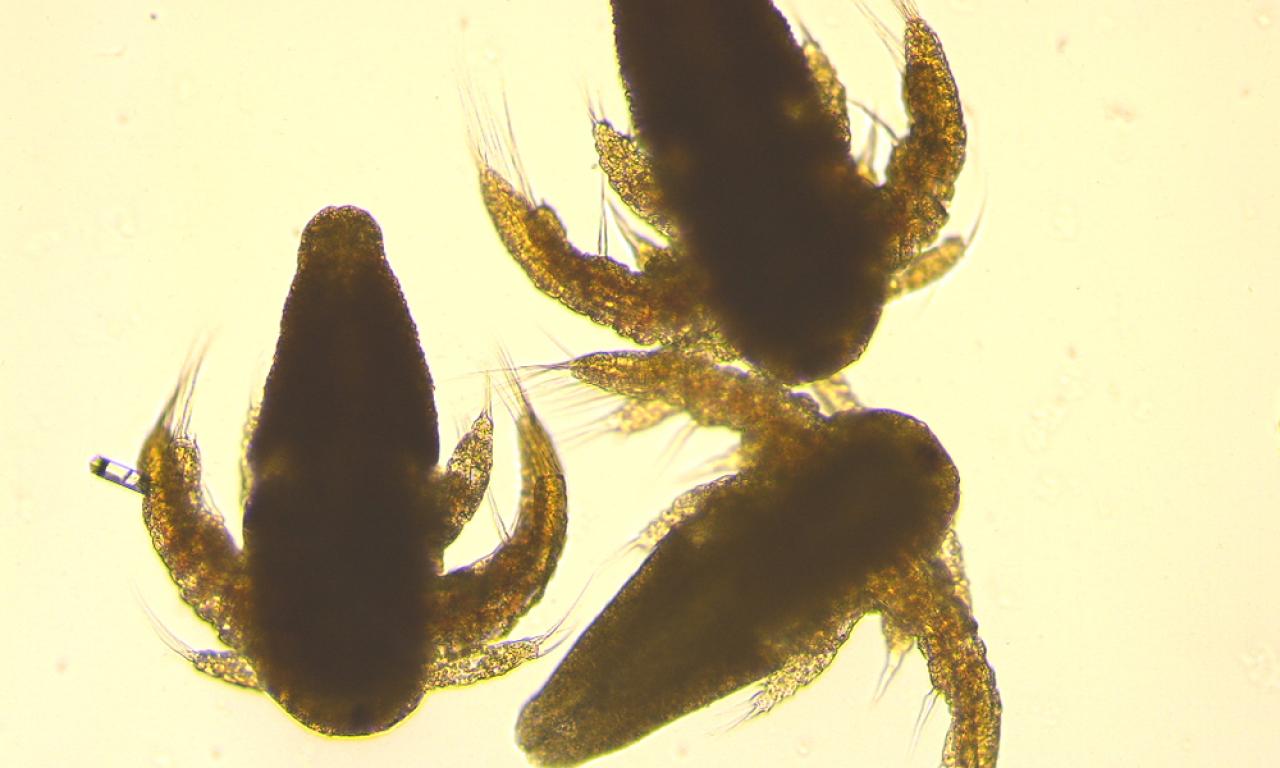
- Artemia nauplii is a critical live food for crustacean and marine fish larviculture.
- The WorldFish-led Artemia4Bangladesh project demonstrated the feasibility of, and developed a model for, integrated salt–Artemia–aquaculture production.
- Multi-stakeholder, market system and SME development is essential for long-term success.
Brine shrimp (Artemia nauplii) sit at the foundation of hatchery production. They provide the proteins, fatty acids and enzymes needed for the earliest stages of crustacean and fish larva development. Without reliable Artemia, larval survival drops and production becomes unstable.
Every year around 3500-4000 metric tonnes (MT) of dry Artemia cysts are marketed worldwide, supporting more than 10 million metric tonnes of aquaculture production. Most commercial cysts are sourced from the Great Salt Lake (USA), and different salt lakes in Siberia (Russia), Kazakhstan and China, and the Aral Sea (Uzbekistan).
Countries including Bangladesh, Brazil, China, Ecuador, Kenya, Thailand and Vietnam are now cultivating Artemia locally to reduce dependence on unpredictable global markets. For Bangladesh, where shrimp and fish hatcheries have long relied almost entirely on imported Artemia, building a domestic supply is therefore a strategic resilience measure.
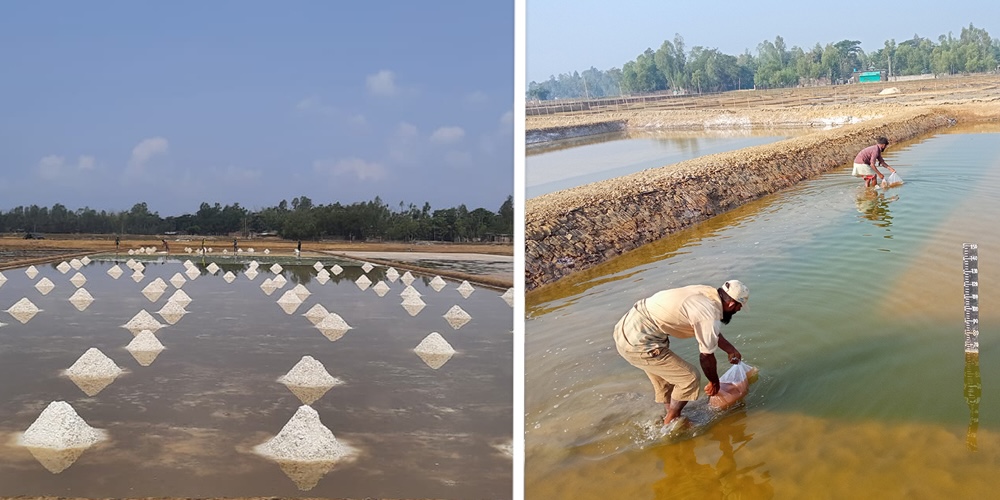
Integrated Salt-Artemia Farming in Cox’s Bazar, Bangladesh
Cox's Bazar district is the backbone of Bangladesh’s salt industry, producing 95% of the 2 million MT of crude salt produced per year in the country. More than 50,000 artisanal salt farmers depend on this seasonal, climate-exposed work for their livelihoods. For half the year, salt provides income. When monsoon rains arrive, production stops and incomes disappear.
This same landscape, however, is ideal for Artemia culture. Integrated Artemia production gives salt farmers a second, and more resilient, income stream while supplying hatcheries with a reliable local feed source.
The EU-funded, WorldFish-led, Artemia4Bangladesh project demonstrated integrated Artemia pond culture in salt farms in Cox’s Bazar. The results were transformative. Salt ponds now produce Artemia cysts and biomass during the dry season, and shift to fish and shrimp culture in the wet season. Some farmers participating in the model reported income increases of up to 400 percent, and more than 3000 farmers have been trained in Artemia culture, coastal and homestead aquaculture practices.
New income Opportunities for Coastal Farmers
Integrated Artemia aquaculture creates multiple income and productivity opportunities for coastal farmers and hatcheries including:
- Artemia cyst and biomass production.
- Reliable local feed for crab and shrimp production.
- Live Artemia biomass for nursery food for fish and crustaceans, and shrimp maturation facilities.
- Frozen biomass for ornamental fish, and crab nursing diet and for human consumption.
- Left-over biomass for chicken, duck and pigeon feed.
- Use of salt farms and Artemia ponds for brackish and freshwater fish culture during the wet season.
Instead of a single-product salt system vulnerable to climate shifts, farmers gain a diversified aquaculture system built for a changing environment. Artemia thrives in high salinity, withstands temperature extremes, and can enter dormancy when conditions worsen, making it suited for coastal Bangladesh.
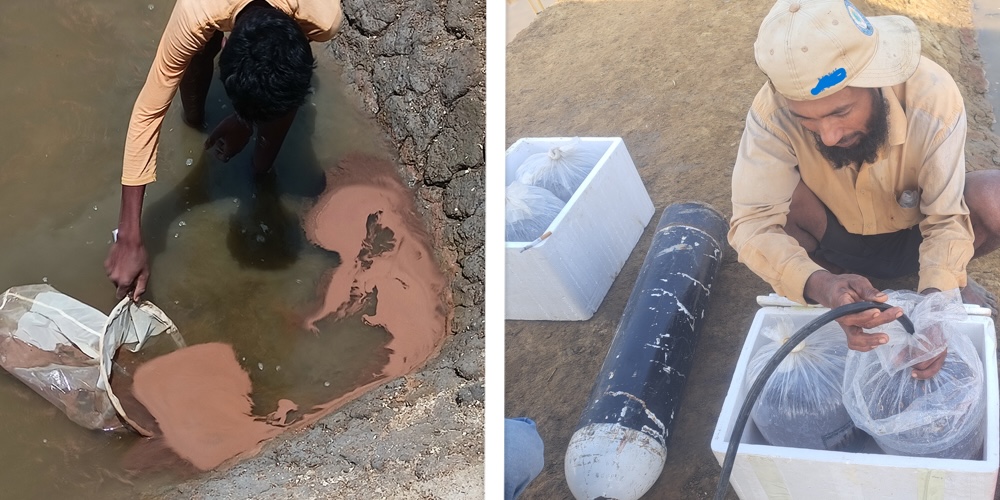
Creating a Viable Artemia Feed Value Chain
The Cox Bazar experience demonstrated the crucial role of private sector engagement to enable a viable value chain anchored around Artemia as feed. Actors along the value chain, such as seed suppliers (hatcheries and nurseries), farmers, traders, processors, and retailers offer opportunities for engaging and fostering small- and medium enterprises.
These efforts, if underpinned by institutional and capacity building efforts, involving governmental and non-governmental organizations, hatchery associations, producer associations, financial institutions, universities, and research organizations, can provide the initial impetus and ensure longer term success of the model.
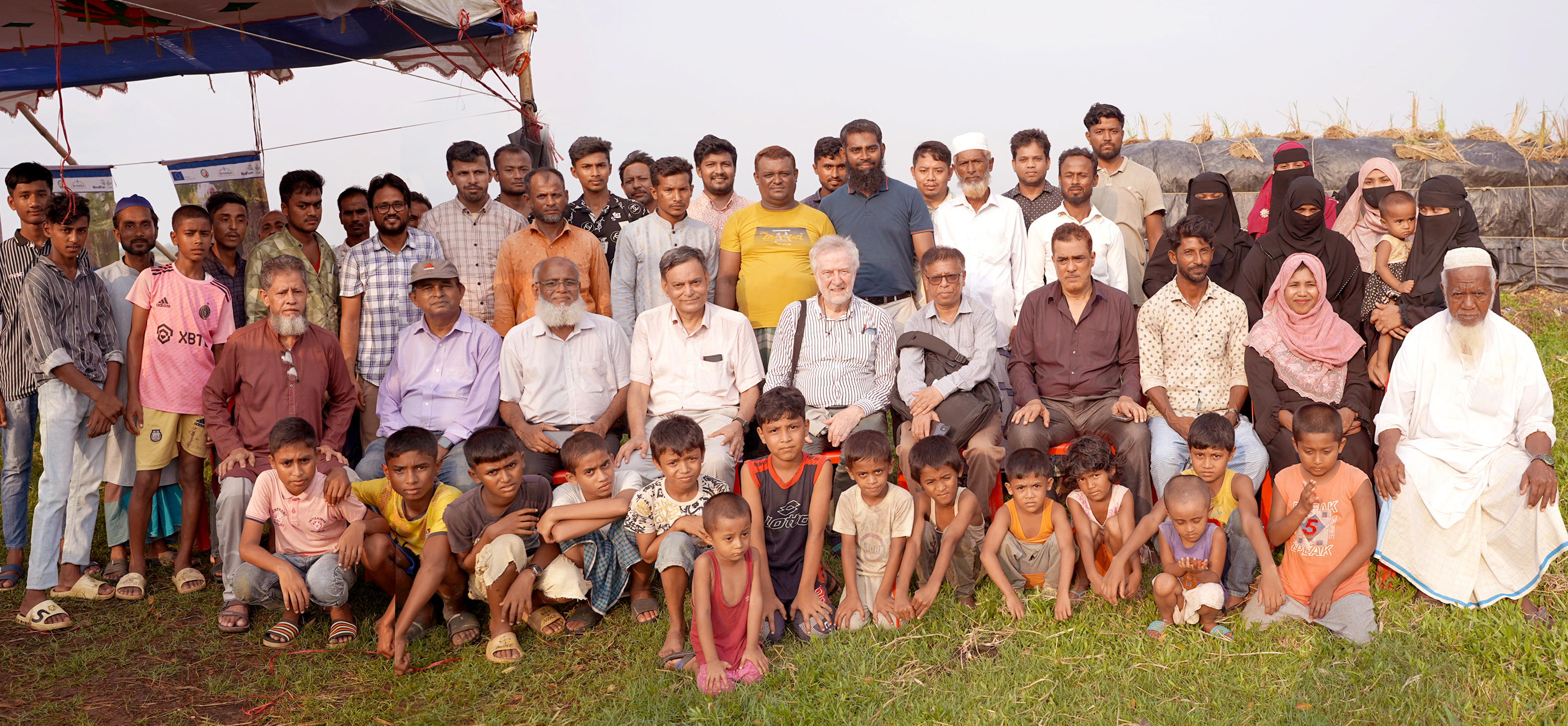
A Gender Inclusive, Socially Acceptable, and Economically Viable Intervention
Gender inclusion is essential. This includes gender sensitization, analysis, development plan, strategy, group formation, basic training on nutrition and hygiene, prevent gender-based violence, and participation in income generating activities.
Social acceptance of the intervention is also critical. As communities adapt to using Artemia not only as fish feed but also as a high-protein supplement for household diets, early cooking demonstrations and recipe trials have shown promising willingness from communities to adopt Artemia as a nutrient-rich food.
Cost-effectiveness and proven market feasibility are essential for the economic viability of integrated salt–Artemia–aquaculture. Small and medium enterprises (SMEs) working across production, processing and supply will help ensure a functional market system, encouraging private sector engagement and creating jobs and inclusive growth.