
Sok Sao
Mam Kosal
David Wardell
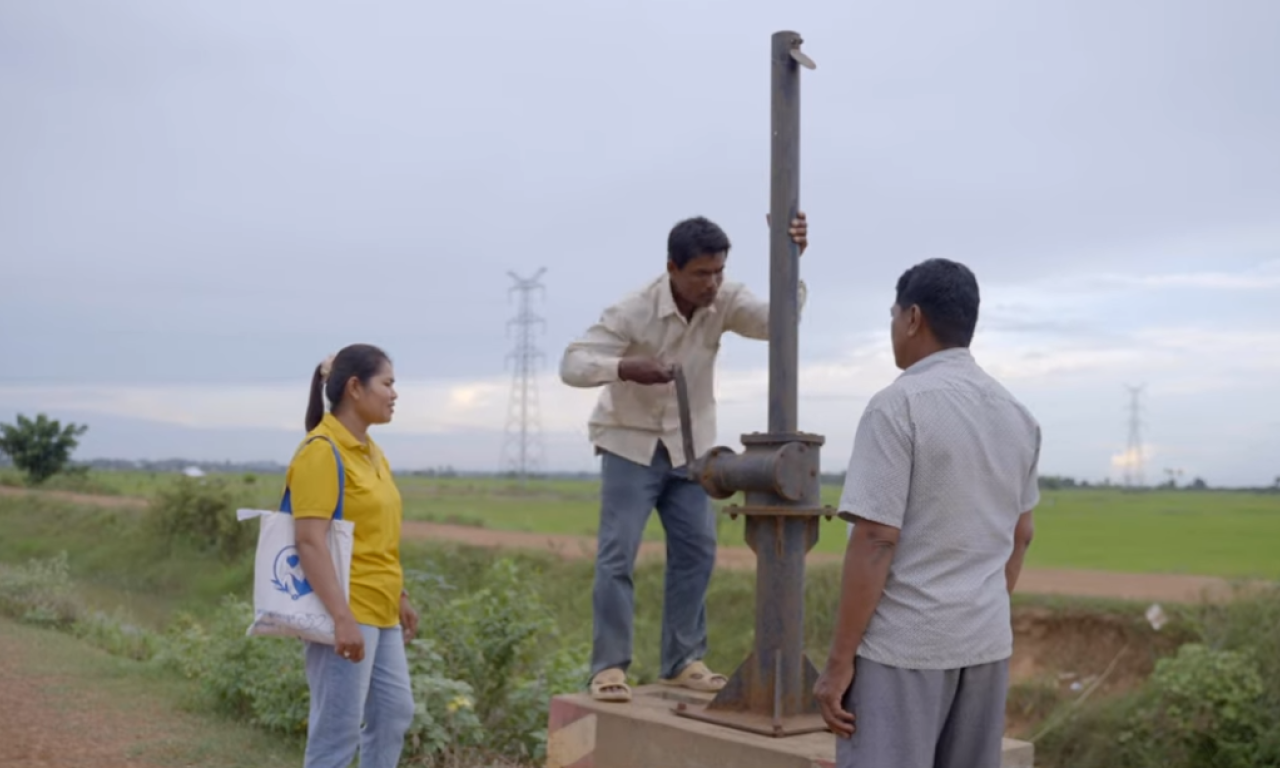
Chea Kong is a farmer and community leader in Santuk District, central Cambodia, and most mornings, she's awake before sunrise.
She walks the Boeng Ream Community Fish Refuge and the nearby Kakos irrigation canal, checking water levels, watching for fish. These early rounds shape her decisions for the rest of the day.
"When the water is right, the rice grows and the fish survive. When it's not, families struggle."
Chea has seen water shortages firsthand. During drought, farmers sometimes pump directly from the refuge to save their crops, weakening it at the moment it's most needed. She knows how quickly that spiral starts.
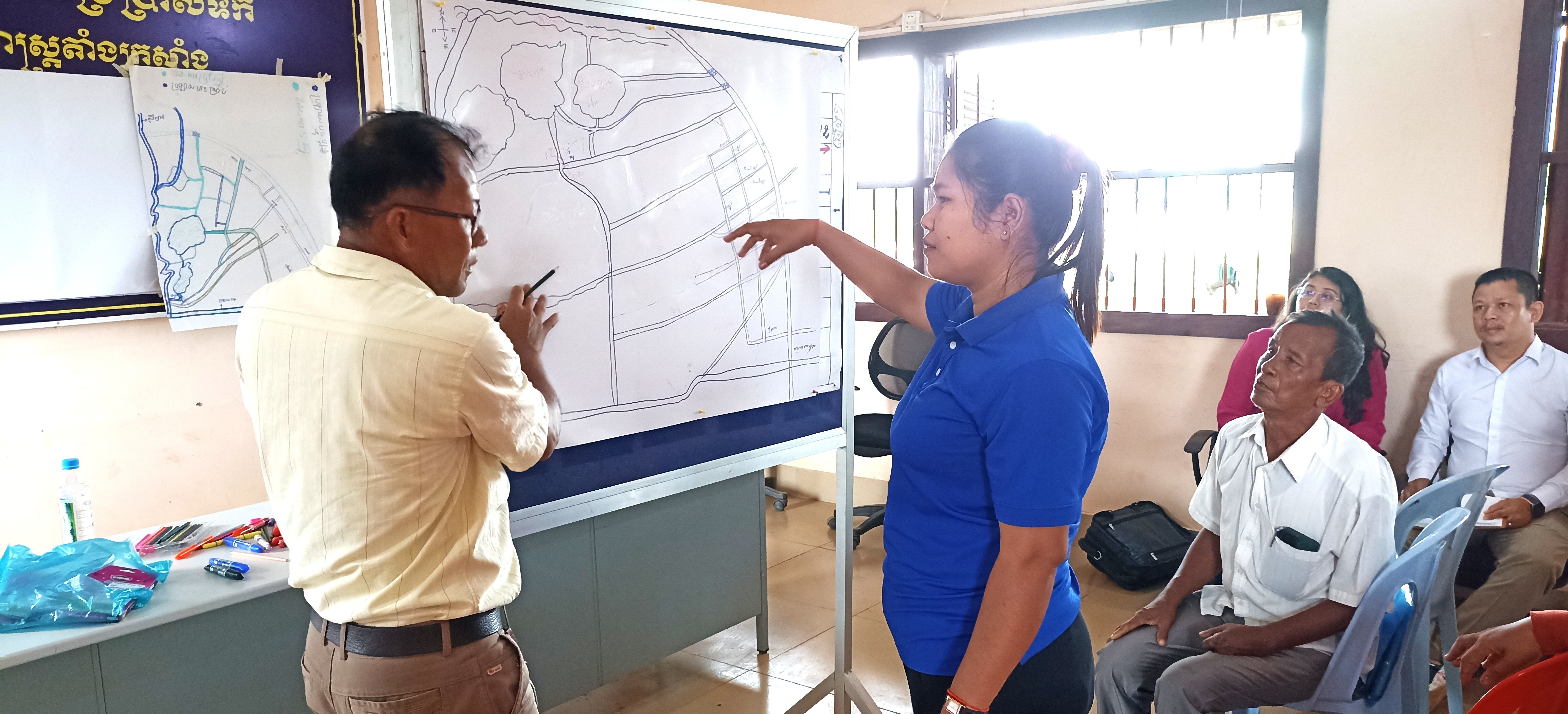
As deputy chief of the Community Fish Refuge and a member of the District Technical Working Group, she works with local authorities to coordinate water allocation and protect the fish that her community depends on for food and income.
“I speak because I live with these problems,” she says. “If we stay silent, nothing will change.”
What happens in places like Santuk District is now shaping national food policy.
Aquatic Foods Recognized as a National Priority
Cambodia has formally recognized aquatic food systems as a national priority. Fish and other aquatic foods are now named as one of six national "Game-Changing Actions" in the country's newly launched Second Roadmap for Food Systems for Sustainable Development 2025–2030, led by the Council for Agricultural and Rural Development (CARD).
Fish accounts for more than half of all animal protein consumed in Cambodia, one of the highest rates in the world. It is also the primary source of essential micronutrients for millions of rural families.
This Roadmap builds on momentum from earlier in 2025, when CARD's Third National Strategy for Food Security and Nutrition placed fish at the heart of Cambodia’s nutrition agenda and goes further, embedding aquatic food systems across the country's broader food systems planning for the first time.
Built on Evidence from the Field
The recognition reflects more than a decade of applied research and community-level work across Cambodia's floodplains, rice fields, schools, and fishing communities that has steadily built the case for why aquatic foods must be central to the country's development strategy.
Since 2012, WorldFish and partners have supported the establishment of over 160 Community Fish Refuges across Cambodia's floodplains, improving management of more than 200,000 hectares of rice-fish landscapes and benefitting between 80,000 and 127,000 households.
In Kampong Thom alone, catch per fishing household rose from 170 kg to 250 kg in a single year under the SAFR project, a gain that translated directly into food on the table and income for rural families.
Alongside CFRs, integrated rice-fields pond systems have demonstrated that modest modifications to existing farmland can transform a single rice harvest into a year-round source of food and income.
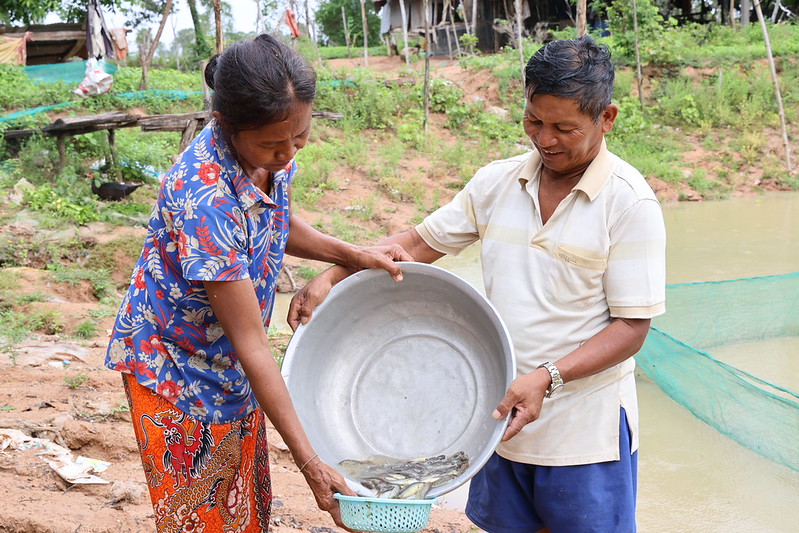
After participating in WorldFish-supported training in Kampong Sleng Village, farmer So Moun said,
"I realized the importance of having a pond, which can generate up to four times more value than rice, even when rice is grown three cycles a year."
In Santuk District, Kampong Thom, Ngork Seng Hong transformed her 0.40 hectares of rice land into an integrated rice-prawn-vegetable system. In her first season she harvested 118 kilograms of fresh prawns alongside nearly a tonne of rice. By the following wet season, she had doubled her prawn harvest to 247 kilograms.
She has since expanded across her whole farm and is now supporting 14 other farmers in her village to do the same.
"We decided to do the integrated farming system because growing only rice wasn't enough to support my family," she says. "I wanted us to be better off."
It reflects long term collaboration between communities, government agencies, and research partners, including efforts under the CGIAR Scaling for Impact Program and the Asian Mega Deltas initiative, which advance integrated approaches to food, water, and climate resilience.
From Ponds to School Meals
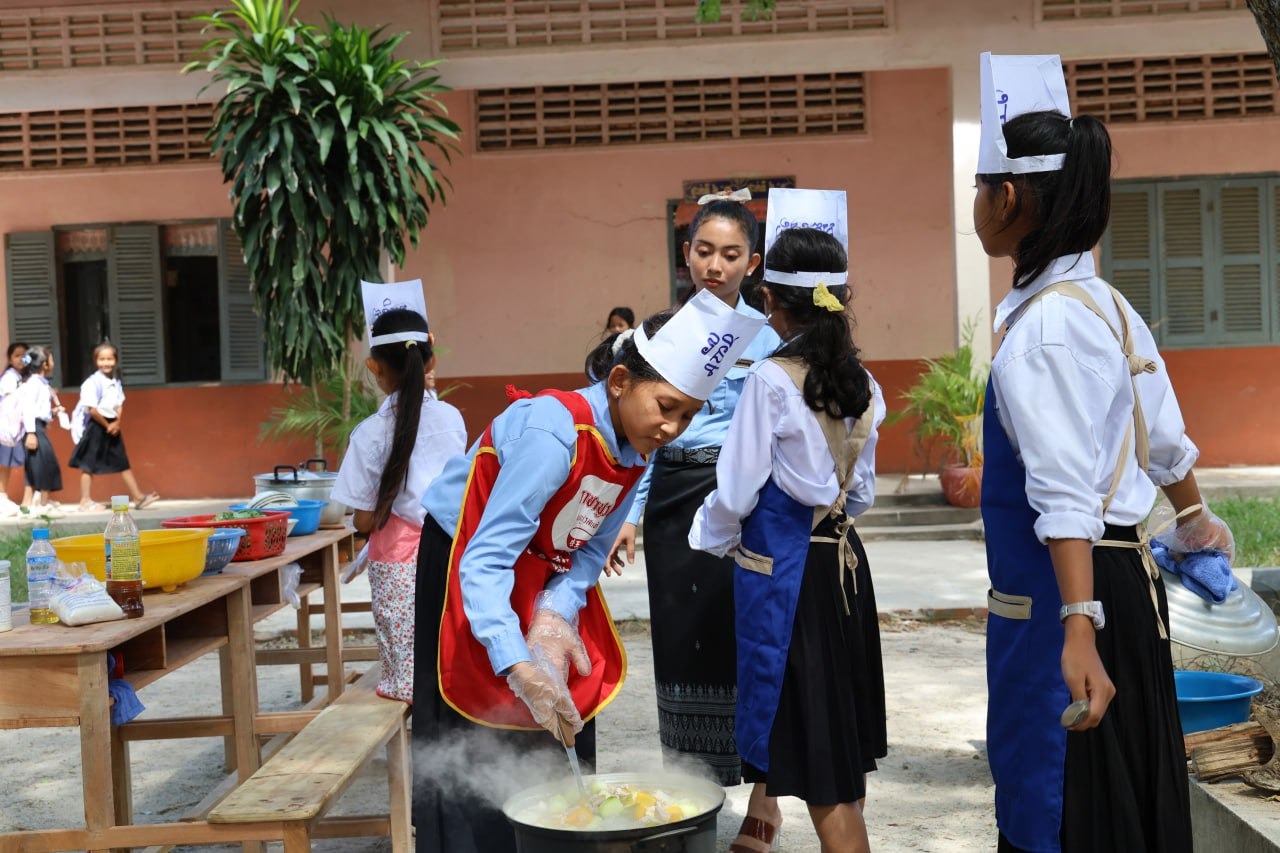
One of the Roadmap’s most concrete commitments is bringing aquatic foods into Cambodia’s school feeding system, with pilots already underway.
Under the CGIAR Scaling for Impact Program, WorldFish and partner IIRR have been working in Kampong Thom and Prey Veng provinces to connect smallholder fish producers to the School Meal Program through Agricultural Cooperatives.
Communities have been trained in the production of small fish powder, which is a low-cost, nutrient-dense product made from locally available small indigenous species that can be added directly to school meals.
Across 28 primary schools, 1,251 participants received training, 671 of them women and girls, and five Agricultural Cooperatives are now supplying locally produced fish and vegetables to schools, giving smallholder farmers a reliable market while improving what children eat.
Embedding Change in Governance
The roadmap's commitments depend on governance structures that can actually deliver at the district level. This is where some of the most significant progress has already been made.
In 2024, WorldFish and the International Water Management Institute (IWMI) in collaboration with Inland Fisheries Research and Development nstitute (IFReDI) piloted District Technical Working Groups (DTWGs) in two districts. These multi-stakeholder platforms bring together line agencies, local government, and community-based organisations to resolve water, fisheries, and natural resource conflicts.
In Ba Phnom District, coordinated water management through the DTWG helped Boeng Sneh Lake retain 32 million cubic metres of dry-season water in 2024, a 28 percent increase from previous years, restoring the lake's fishery and reducing conflicts between rice irrigation and fish production.
For Mr. John Sopharoth, Provincial Department of Water Resources and Meteorology Representative and DTWG Member, the shift was fundamental.
"Through the DTWG platform, we've witnessed how a more inclusive dialogue and shared planning can turn resource conflicts into cooperation," he says.
In November 2024, WorldFish and partners convened a National Dialogue on integrated food system governance at the Council of Ministers in Phnom Penh. Senior officials, including Senior Minister and Chairman of the Council for Agriculture and Rural Development (CARD), H.E Dr. Ouk Rabun, expressed support for the district Technical Working Groups as a practical model for improved coordination across fisheries, water, agriculture, and nutrition, noting the approach aligned with Cambodia’s decentralized reforms.
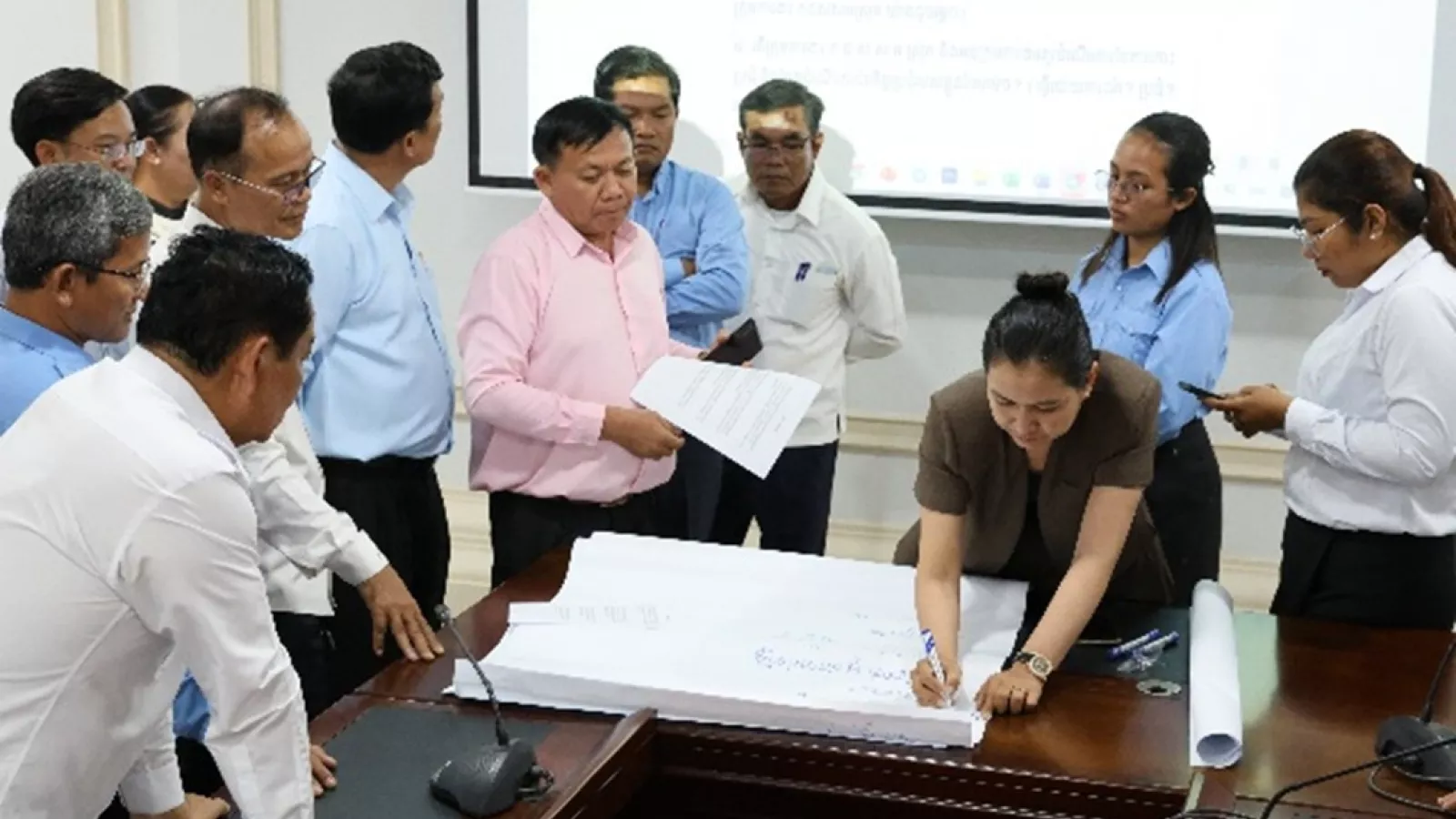
In September 2025, CARD agreed to convert the Santuk and Ba Phnom DTWG into a permanent District Working Group for Food Security and Nutrition (DWG-FSN) and to establish two new working groups in adjacent districts, signalling its intention to adopt this model as the key institutional mechanism for implementing the Third National Strategy for Food Security and Nutrition 2024-2028.
That institutional shift was reinforced in December 2025, when 83 representatives from national and sub-national government, research institutions, and communities gathered in Prey Veng to share lessons from district-led food systems governance and discuss scaling the model nationwide.
Work that began in districts like Santuk and Ba Phnom is now informing national food systems planning.
For Chea Kong and the communities like hers, the change is already visible, in the water levels she monitors each morning, in the fish that return each season, and in a national policy tbuilt on evidence from the ground up.
Cover photo: Chea Kong (left) coordinates with local authorities to open the watergate in Santuk District, Kampong Thom, managing water flows that sustain both rice fields and community fish refuges. Photo: WorldFish.