
WorldFish
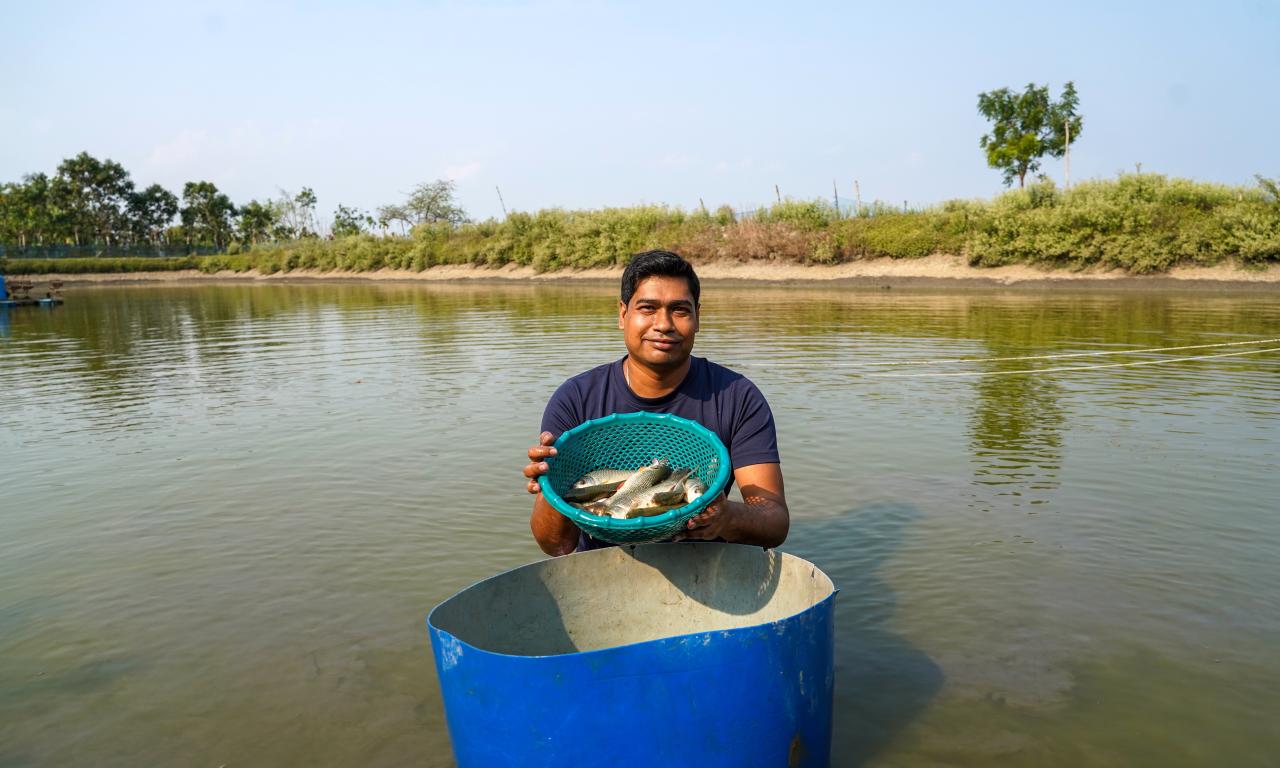
A selectively bred carp strain is boosting productivity and profits across polyculture ponds in Bangladesh, improving overall pond performance in smallholder systems.
A recently completed study shows that the third generation (G3) rohu, developed by WorldFish, grows 32.6% faster than conventional local fish and increases net margins by 24.8% for farmers, with higher total production and revenue across polyculture pond systems.
“These results tell us that selective breeding works. Farmers who grew G3 rohu saw real differences in their ponds and in their income, which is what a decade of this program has been building toward,” said WorldFish Scientist Hazrat Ali.
Rohu is the most important carp species in Bangladesh, with more than 440 million kilograms produced annually with a wholesale market value close to USD 1 billion.
Carp farming in Bangladesh is dominated by small-scale farmers, many of whom culture fish partly for household consumption and partly for sale, making the species vital to sustaining livelihoods and food and nutrition security for millions of rural households.
But for decades, carp productivity and profitability have been held back by limited access to improved strains.
The G3 rohu, developed under WorldFish’s Carp Improvement Program, was disseminated to private and Department of Fisheries hatcheries from 2020 to 2023, and was adopted by almost 300,000 farmers in 2025.
“With G3 rohu, I can either harvest earlier or grow them for the same time and get bigger, more valuable fish. Either way, I earn more from my pond,” said Amit Joarder, study participant and fish farmer.
The study evaluated and compared the growth and profitability of disseminated G3 rohu with commercial local rohu under typical smallholder pond polyculture systems, establishing that genetically improved G3 rohu significantly outperforms the traditional local rohu.
The study also found these gains translated into higher overall pond revenue, increasing by USD 644 per ha, amounting to a 24.8% increase in net margins for farmers (profit after costs are considered) across all species in polyculture ponds.
The study’s findings suggest that wider dissemination of G3 rohu fingerlings, coupled with improved pond management, could significantly enhance smallholder productivity and profitability in Bangladesh and contribute to greater sustainability as aquaculture sector continues to boom.
Carp farming primarily adopts polyculture production systems, in which multiple carp and other species are cultured together to maximise productivity and resource-use efficiency. As a low-trophic finfish, carp do not require fishmeal or fish oil-based feeds, making them an inherently low-emissions and environmentally sustainable option for Bangladesh’s abundant freshwater resources.
Improving every generation, the fifth selected generation (G5) of rohu, currently under trial, is expected to offer over 50% faster growth, with continued funding support to the program through CGIAR science programs of Sustainable Animal and Aquatic Foods and Scaling for Impact.
“In addition to G5 rohu, improved strains of catla (G3) and silver carp (G4) will be disseminated to hatcheries in 2026-27 and will be available to farmers from 2028. With multiple selectively bred species of carp available in Bangladesh, the productivity and profitability of small-scale carp polyculture in Bangladesh can improve substantially in coming years,” said Mohammed Yeasin (Dissemination Manager, WorldFish)
Research on higher-performing rohu, along with catla and silver carp, have been part of WorldFish’s Carp Genetic Improvement Program since 2012, with past support from the United States Agency for International Development (USAID), Bill & Melinda Gates Foundation, International Fund for Agricultural Development, European Union and CGIAR.
Notes to Editor
Bangladesh carp farming background
Carp is the most important aquaculture species group globally. In Bangladesh, more than 1.6 billion kilograms of carp are produced annually, accounting for approximately 56% of total aquaculture output.
Rohu is the most important carp species in the country, with more than 440 million kilograms produced each year and a wholesale market value approaching USD 1 billion.
![Amit Joarder's homestead and pond in [district], Bangladesh. Photo: Harun Or Rashid/WorldFish](/sites/default/files/inline-images/Mr.%20Amit%20household%20and%20homestead%20pond1.jpeg)
-----END -------
For further information and interview with lead scientists, contact David Wardell at d.wardell@cgiar.org.
Cover photo: Amit Joarder prepares G3 rohu fingerlings for stocking at his pond in Bangladesh. The selectively bred strain grows 32.6% faster than conventional rohu and increases net margins by 24.8% for smallholder farmers. Photo: Harun Or Rashid/WorldFish.