
Kosal Mam

Vichet Sean

Vathanak Sun
David Wardell
In Cambodia, rice is more than a staple crop; it is the heartbeat of the nation. Yet climate change and volatile market prices are shaking this foundation. The traditional monoculture model is no longer enough to sustain Cambodian farmers.
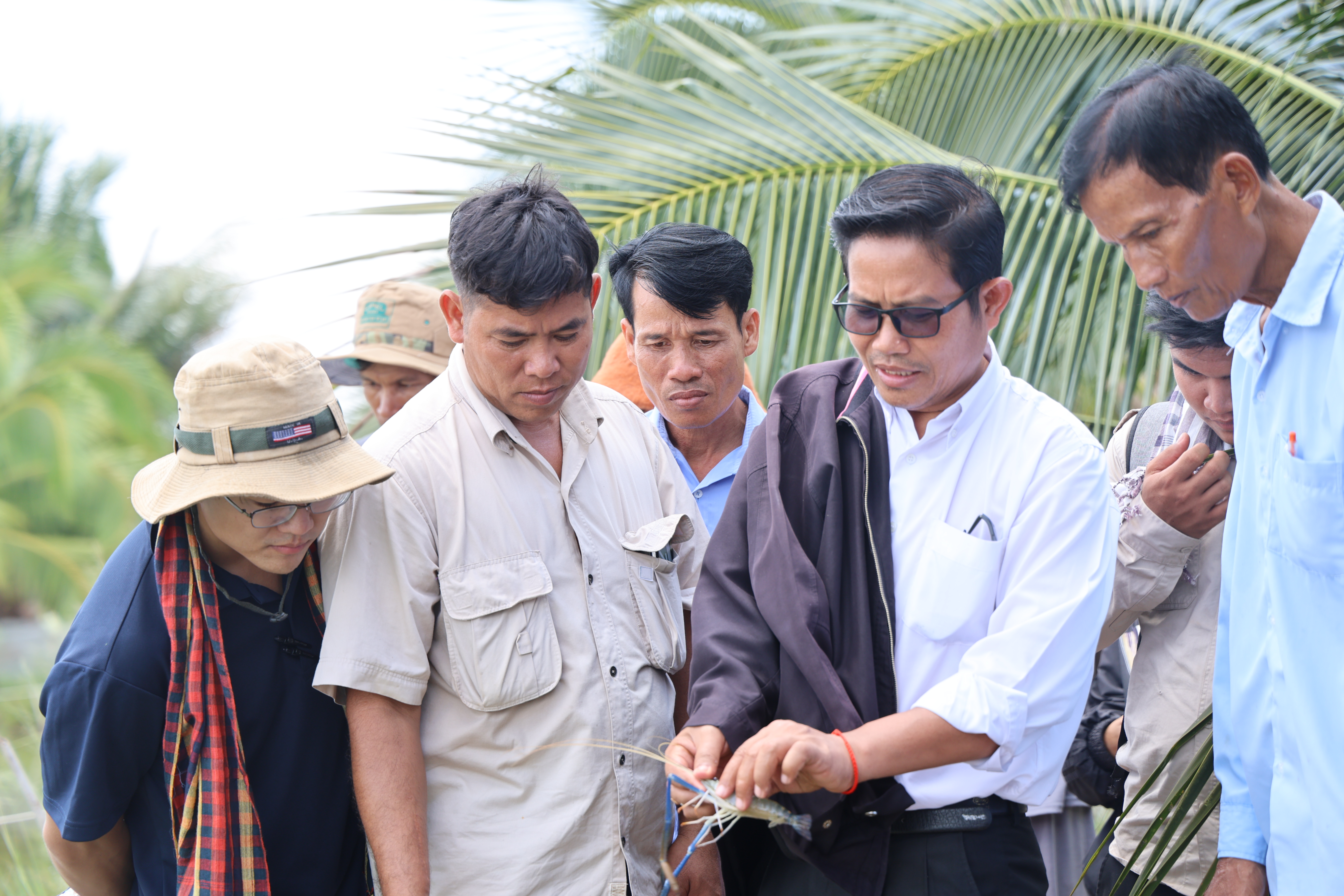
In Kampong Thom and Prey Veng, work under the CGIAR Multifunctional Landscapes program is testing integrated rice-based systems that combine rice with prawns and vegetables to strengthen incomes, nutrition, and climate resilience.
By integrating Rice–Prawn–Veg into the rice field system, we are transforming vulnerable fields into resilient, biodiverse hubs. These climate innovations prove that technical feasibility and economic profit can go hand in hand.
This blog shares evidence on how diversified rice systems can outperform monoculture economically, nutritionally, and ecologically.
What is the Integrated System?
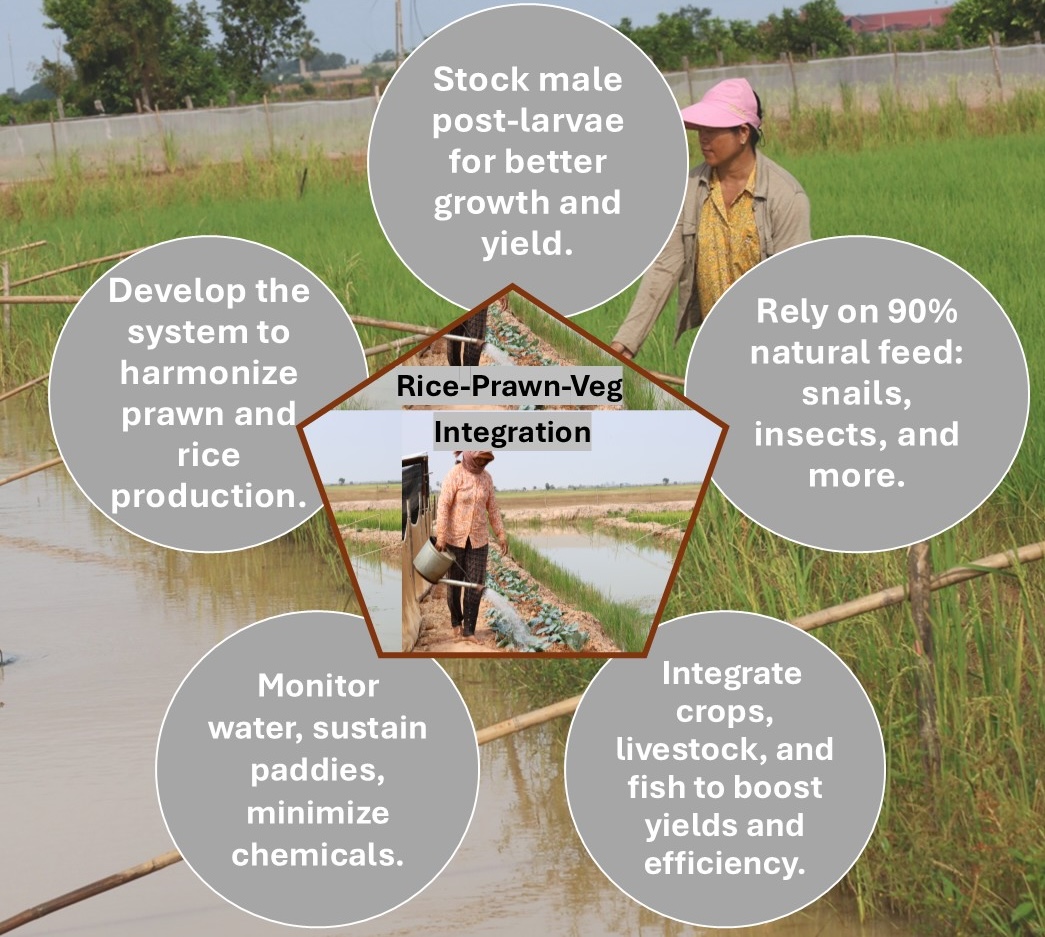
Building on traditional rice farming, we are reimagining the field as a dynamic ecosystem. As such, we intentionally redesign the plot of land for integration and optimize productivity.
This transition involves improving dikes, creating strategic canal networks, and moving away from chemical inputs. With careful environmental monitoring and supplemental feeding, farmers can transform a simple grain field into a thriving, multi-crop hub.
Key Findings
Profit
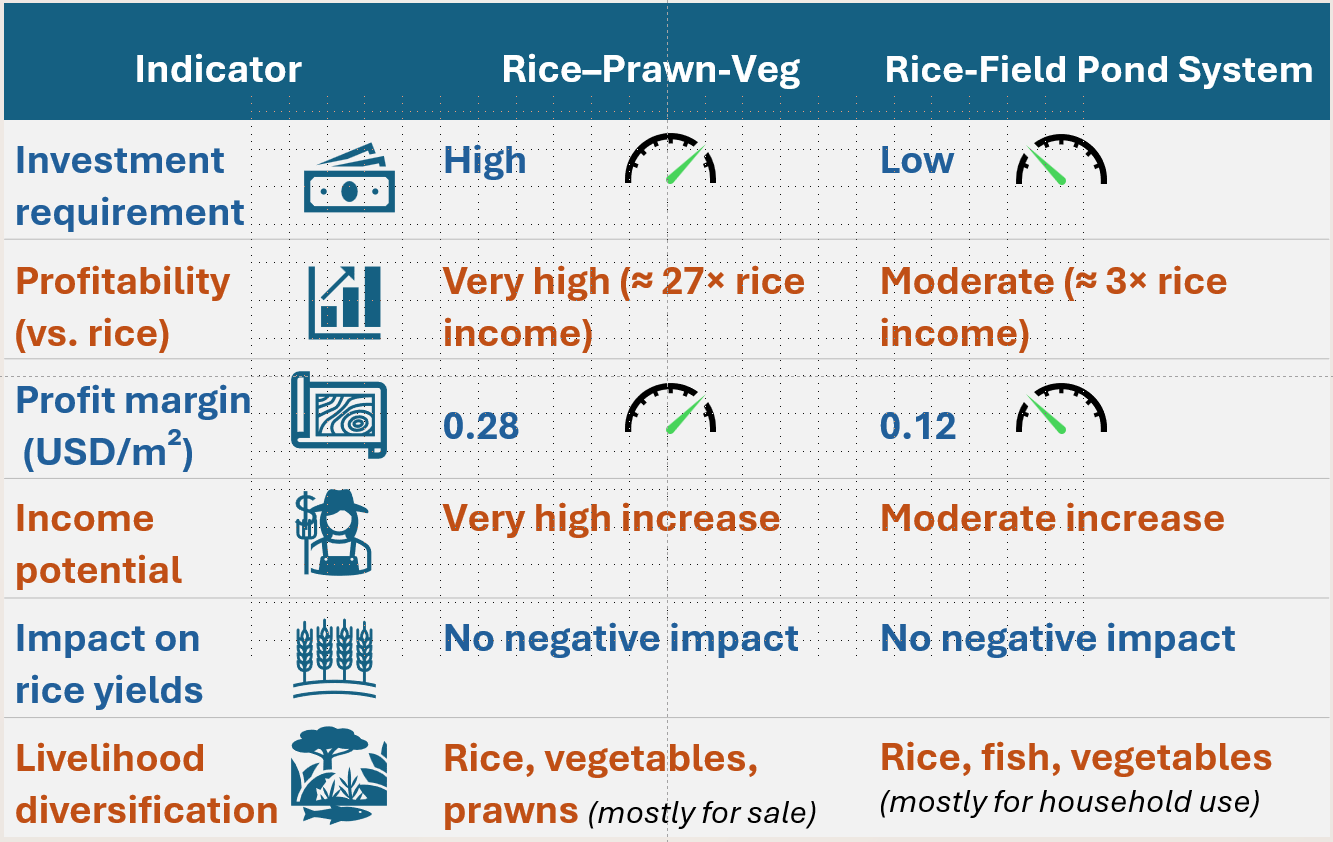
- Rice–Prawn–Veg integration delivered substantially higher profitability, generating 27 times more net profit (USD 0.28/m²) than traditional rice monoculture (USD 0.01/m²). This turns rice farming from a low-margin activity into a diversified income system.
- Modifying the Rice Field Pond System can also create substantial added value with relatively low risk. When implemented through the Rice Field Pond (RFP) system, it can generate triple earnings—up to USD 0.12/m²—providing smallholders with significant income gains while maintaining stable rice yields.
Performance Scorecard
- Economic Engine: Prawns generate more than 94% of system revenue, yielding 470 kg/hectare in just 150 days.
- Yield Stability: Rice productivity remains stable at 3–4 tons/hectare, ensuring no trade-off between cash crops and staple food.
- Efficiency: Integrated systems optimize land use, layering high-value protein over traditional grain.
Nature-Based Solutions
- The dikes and canal networks function as vital ecological refuges, shielding fish from pesticide exposure and enabling farmers to retain broodfish for natural restocking.
- Beyond aquaculture, stored water extends the growing season for dry-season vegetables, while the rice–prawn system creates a circular economy: prawns naturally control pests by consuming Golden Apple Snails, which are recycled into high-quality feed. This integrated system reduces chemical dependency while ensuring year-round food security.
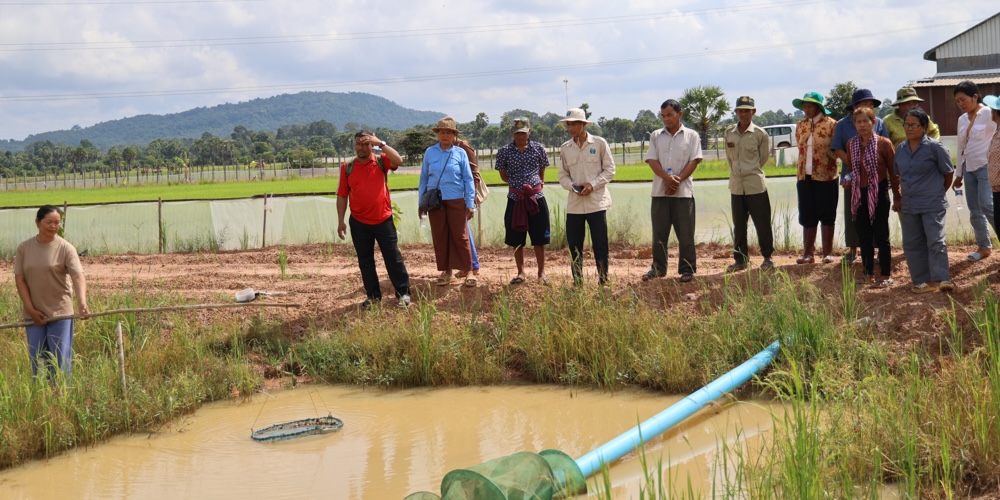
For participating farmers, the shift is already changing how rice fields are valued and managed.
“In the past, our costs were high and our profits were low. By integrating vegetables and prawns with our rice, we have significantly reduced our need for chemical inputs while maintaining our rice yield. Now, we have added the benefit of high valued prawns and vegetables to sell." — Mrs. Nam Nara, rice–prawn farmer, Kampong Thom province
Comparing Integrated Rice-Based Systems
The Rice–Prawn–Veg integration outperforms rice monoculture, and even the Rice-Field Pond System. Rice–Prawn–Veg integration shows the highest profitability, while the dikes and channel networks provide ecological services and long-term resilience.
Sustainability Benefits
- Lower Inputs, Higher Safety: Natural pest control (prawns consuming snails and insects) reduces the need for toxic chemicals and lowers environmental risks.
- Resilient agroecosystems: Enhanced biodiversity and water management strengthen the farm’s ability to withstand climate shocks.
- Biodiversity safeguard: The dikes and channel networks act as “nature-based refuges,” protecting fish populations and maintaining ecological balance.
- Empowering Women: The system creates leadership roles for women in management and sales, turning farm diversification into social empowerment.
Key Priorities for Scaling
- Capacity & Innovation: Empowering farmers and commune agricultural officers in integrated management, from nutrient recycling and composting to high-efficiency feeds like Black Soldier Fly (BSF) larvae.
- Institutional Coordination: Linking local-scale efforts with district and national Food Security and Nutrition working groups to ensure long-term governance and support.
- Policy Integration: Explicitly recognizing the integrated system to optimize production in the rice field system in relevant government policies and strategies (see: Cambodia’s Third Nationally Determined Contributions NDCs).
- Standardized Knowledge: Developing comprehensive technical manuals to guide extension services and ensure quality across all provinces.
Together, these results point to a scalable pathway for turning rice monocultures into multi-benefit ecosystems that deliver food, income, and resilience on the same land.
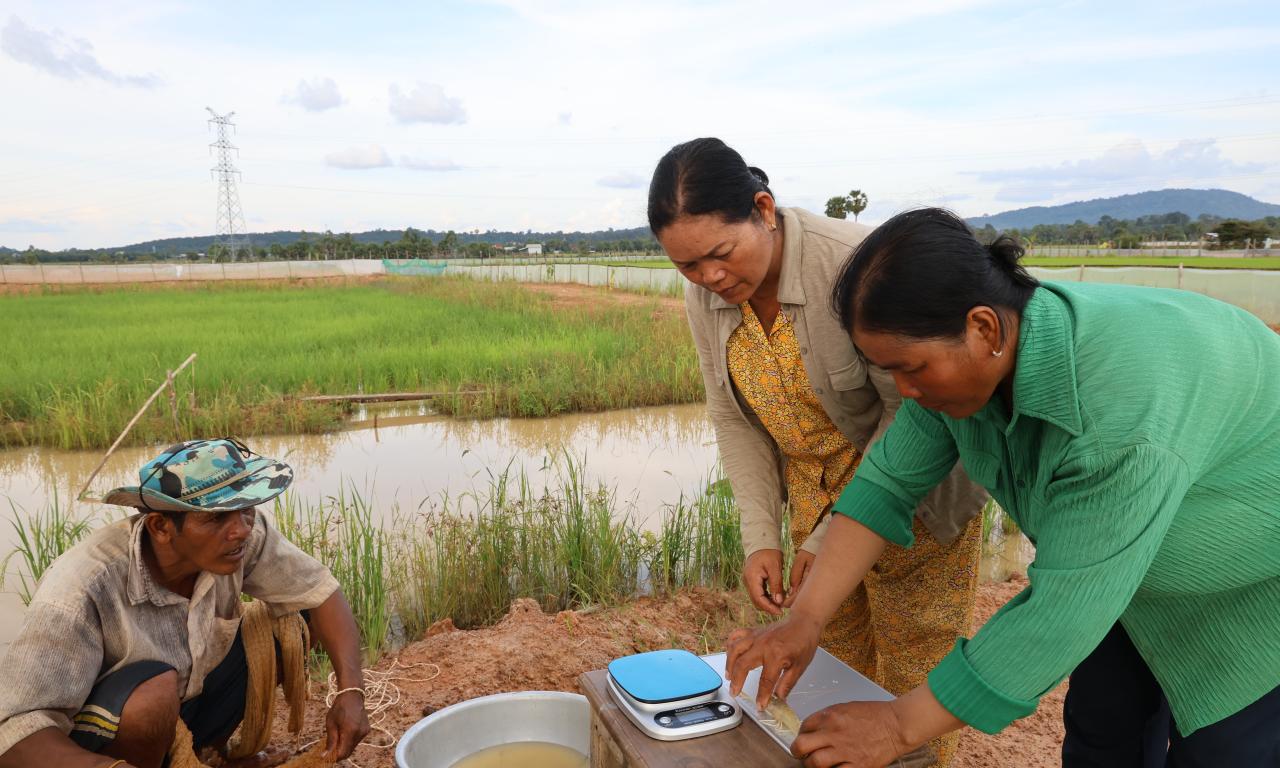
Cover photo: Women-led prawn sampling for growth monitoring, Kampong Thom Province. Photo: Sean Vichet/WorldFish.