
Dilruba Sharmin

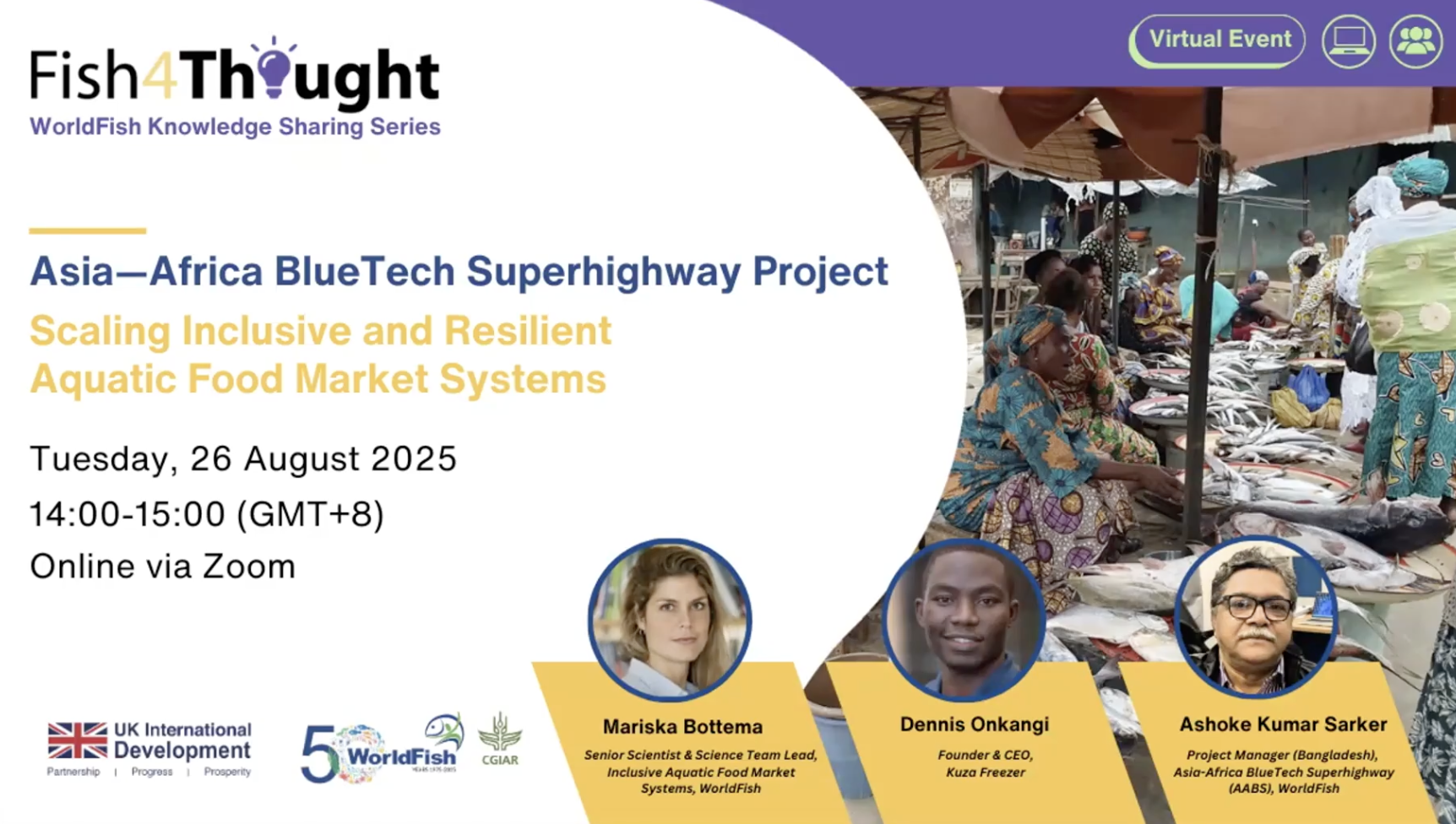
The future of aquatic food systems is being reshaped through fostering inclusive market systems that not only ensure food security but also contribute to climate resilience and the empowerment of marginalized communities. A recent Asia–Africa BlueTech Superhighway (AABS) webinar showcased a series of groundbreaking initiatives aimed at transforming aquatic food systems through scaling inclusive market systems in Asia and Africa. Spearheaded by experts, Dr. Mariska Bottema, Senior Scientist and Science Team Lead at WorldFish, Dennis Onkangi, Founder & CEO of Kuza Freezer, and Ashoke Kumar Sarker, Project Manager at AABS Bangladesh, the webinar highlighted the critical steps being taken to drive positive change in the sector.
Inclusive Aquatic Food Systems: WorldFish’s Approach
Dr. Mariska Bottema started the conversation with a focus on the importance of inclusive aquatic food market systems. Market systems, she explained, are networks of people, businesses, services, rules, and relationships that shape how products move from producers to consumers. But many existing market systems still exclude marginalized groups, such as women and small-scale producers, from participating actively and benefiting fairly.
Dr. Bottema focused on the importance of building inclusive systems where all actors, including vulnerable groups, can thrive. This involves ensuring equity, participation, and sustainability within the entire value chain. For example, women play a central role in the aquatic food industry, particularly in processing, but often face barriers such as limited access to inputs, finance, and markets. To overcome these challenges, AABS promotes technical innovations like cold storage solutions, strengthening the local private sector, building market linkages between producers and buyers, and enabling producers to conform to food safety standards which will in turn increase their access to markets.
These efforts are not just about increasing market access; they are about transforming the way value is distributed within these markets, ensuring that no one is left behind. AABS's emphasis on inclusivity is a foundational principle for scaling successful solutions that can be replicated across regions and communities.
Empowering Small-Scale Fishers: Kuza Freezer’s Cold Storage Innovation
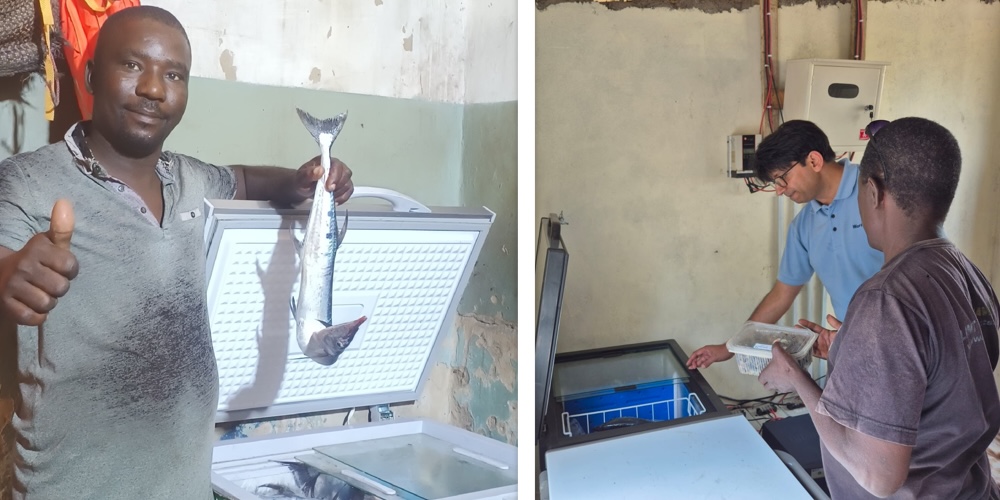
A key challenge faced by small-scale fishers in off-grid areas is the lack of reliable cold storage, which leads to the loss of up to 45% of their daily catch. This results in financial losses and food waste, undermining food security and limiting income potential. Dennis Onkangi, Founder and CEO of Kuza Freezer, introduced an innovative solution to this problem with solar-powered PayGo freezers.
These freezers, which range in size from 100 to 150 liters, are designed for last-mile cold storage in areas with unreliable access to the power grid. They come equipped with a built-in rechargeable battery that lasts up to 5 hours and can be managed remotely via SMS and integrated M-PESA payment systems. This allows fishers to control and monitor the freezers' power usage, ensuring they only pay for the energy they use. This innovation not only helps reduce spoilage but also enables fishers to connect to broader markets, ensuring fairer pricing and reducing the reliance on middlemen.
Kuza Freezer’s PayGo model has already made a significant impact, with over 450 freezers deployed across Kenya. A notable achievement has been the empowerment of women-led fish farming projects, who make up over 70% of the beneficiaries. However, the solution faces challenges, such as seasonality in fish catches, which affects the repayment ability of fishers, especially during off-peak seasons. Despite these hurdles, Onkangi's vision for energy-resilient cold storage is providing small-scale fishers with tools to increase income, reduce waste, and improve food security.
IMTA in Bangladesh: A Step Towards Sustainable Aquaculture
In Bangladesh, Ashoke Kumar Sarker, Project Manager at AABS, shared an update on developing Integrated Multi-Trophic Aquaculture (IMTA) in Bangladesh. IMTA is a sustainable aquaculture practice that combines species from different trophic levels, such as fish, prawns, seaweed, and bivalves, creating a more balanced and resilient ecosystem. This method reduces negative environmental impacts and allows for efficient nutrient recycling.
AABS has been running 19 pilot sites in Bangladesh, testing seven different species combination models across both pond-based and marine-based systems. By integrating prawns, fin fish, seaweed, and mussels, these systems have shown promise in improving both food security and the sustainability of aquaculture practices. However, without sufficient demand for products coming out of IMTA farming, and without the inputs needed for production, the future of IMTA in Bangladesh remains limited. The project faces input supply issues (many species are still sourced from the wild) and marketing hurdles, particularly for products like seaweed and bivalves, which have limited market demand.
To address these challenges, AABS is working with private sector stakeholders to promote awareness and create market demand for these underutilized species. Additionally, efforts are underway to develop depuration protocols for bivalves to ensure food safety and increase consumer confidence, and to develop a process of certification by the authorized government department. Additionally, AABS is partnering with Green Mariculture, a private seabass hatchery located in Cox's Bazar to support the nursing of seabass fry ahead of grow-out stocking. With these ongoing innovations, Bangladesh is poised to scale up its use of IMTA, moving toward a more sustainable, nature-positive aquaculture system.
The Road Ahead: A Vision for the Future
The AABS webinar underscored that innovation, collaboration, and inclusivity are key to building sustainable aquatic food market systems that benefit both people and the planet. By promoting inclusive market systems through scaling solar-powered cold storage in Kenya and IMTA models in Bangladesh, AABS is leading the way toward a more resilient and equitable future for the global aquatic food sector.
As the project continues to scale and refine these solutions, its efforts will help unlock the full potential of aquatic food systems, creating lasting impacts for coastal communities, small-scale fishers, and the environment. The path forward is clear: through innovation, equity, and sustainability, we can transform the way we produce, consume, and manage aquatic foods for the benefit of all.
AABS: Bridging Innovation and Sustainability
The Asia–Africa BlueTech Superhighway initiative is a seven-year project, from 2023 to 2030, implemented by WorldFish with a host of partners to sustainably transform aquatic food systems in Asia and Africa. Funded by UK International Development under the Blue Planet Fund, AABS aims to leverage South–South collaboration to deliver a triple win for nature, people and climate.
AABS aims to foster sustainable aquaculture, improve small-scale fisheries management, and restore marine ecosystems. Its approach harnesses South-South collaboration to adapt and scale evidence-based innovations, creating a nature-positive impact across coastal communities in Asia and Africa. Through its diverse initiatives, AABS focuses on improving food and nutrition security, generating income opportunities, and enhancing climate resilience through nature-based solutions. These efforts are crucial to ensuring that both people and the planet benefit from the growing aquatic food industry.
AABS is working towards creating a triple win for nature, people, and climate by integrating digital transformation for fisheries management, promoting climate-smart innovations, and supporting the sustainable management of marine and coastal resources. The goal is to develop resilient, profitable, and sustainable aquatic food systems that uplift marginalized communities—particularly women and youth—while restoring and preserving the ecosystems they depend on.
Watch the webinar here: https://www.youtube.com/watch?v=DgHGDCyX4CM
Cover photo: Integrated multi-trophic aquaculture (IMTA) site on Kenya’s Mombasa coast. Photo: Jerome Delamare-Deboutteville/WorldFish.