
Quennie Vi Rizaldo
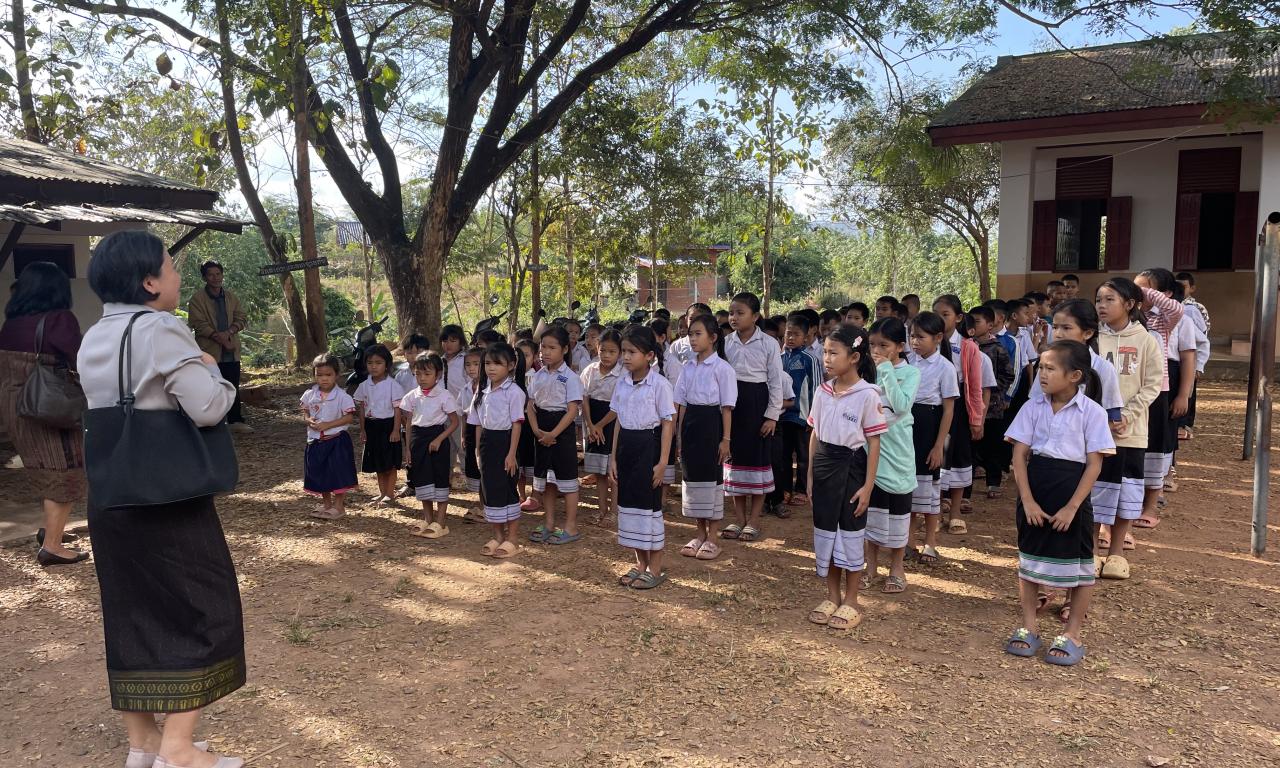
“Sabai Dee!” — a greeting that echoed through the classroom when we arrived at Nahoy Primary School, about an hour’s drive from Vientiane, Laos. It was afternoon break, and children were busy chatting and playing. When we asked what they had for lunch that day, several proudly replied, “Vegetables!”, adding that they liked their meals very much.
After receiving the snacks we brought, the children returned to their classrooms and immediately shared them with one another. As always, children have a beautiful way of reminding adults that small acts of kindness, like sharing food, can create moments that truly matter.
That spirit of sharing is at the heart of Nahoy Primary School’s approach to providing nutritious lunches. Families contribute small amounts of food, time, and labor a few times each month, helping ensure that children eat better today and grow into healthier, more productive adults tomorrow.
Interestingly, when we asked the village chief why the community now supports the program so strongly, he admitted that at first, they didn’t. It was through persistent community awareness campaigns led by school leaders and village officials that parents began to understand its importance.
Community Ownership Makes It Sustainable
This eventually led to parents contributing about 2,000 LAK (around USD 0.10) per day to help purchase ingredients, prioritizing food from local farmers whenever possible. This contribution system now functions as a local safety net, helping sustain the program beyond donor support.
The school has also established a kitchen garden that supplies fresh vegetables, with district agriculture officers training the school committee in sustainable and regenerative practices. Still, declining soil fertility and reduced water availability are affecting productivity, a reminder of how vulnerable food systems are to climate pressures.
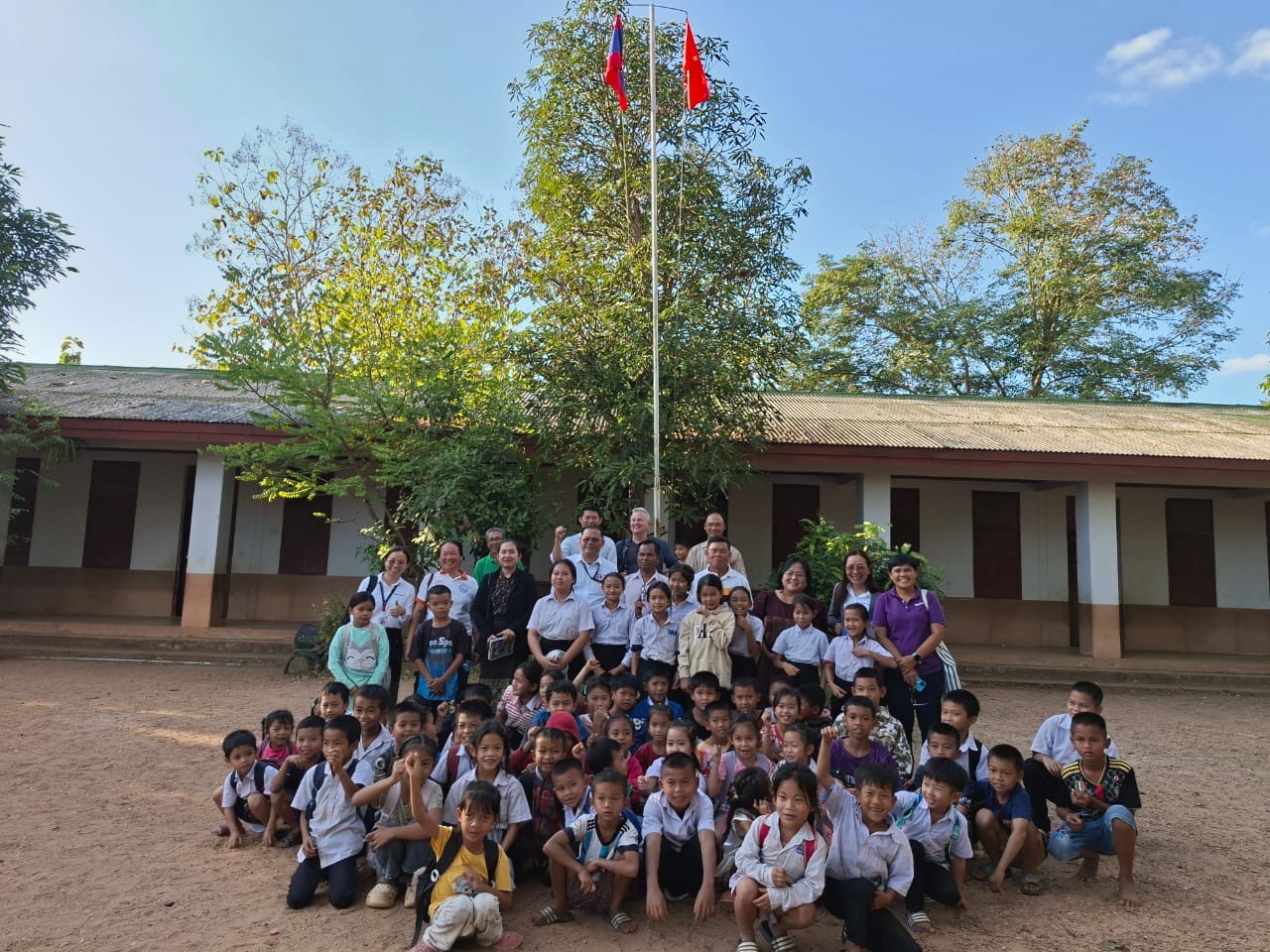
Seeing this firsthand made me reflect on the importance of continued investment in climate-resilient and regenerative practices, especially for children. Yet with shifting government and donor priorities, sustaining momentum is becoming harder. It raises a difficult question: what happens if we stop investing, and whose future are we willing to leave behind?
What gives me hope is that, despite limited resources, this community continues to move forward. As the school administrator shared, having reliable community groups — especially the Women’s Lao Union — makes all the difference. These women prepare meals, organize volunteers, and coordinate food contributions. Many are also small-scale farmers, bringing vegetables, fish, pork, and other foods from homestead farms directly into school kitchens. Their work nourishes children while strengthening local food systems and livelihoods.
At the same time, I found myself wondering whether women are carrying too much of the responsibility alongside their household duties. Recognizing and compensating for their work is essential, not only to reflect their true value in budgets and plans, but also to validate their leadership and strengthen their livelihoods. Investing in women’s leadership in school food systems is not just about equity; it is fundamental to sustainability.
Women at the Center of the Program
What stays with me most from this visit is the power of community ownership and women’s leadership. I hope stories like Nahoy Primary School will reach more schools and communities — to inspire those who believe the challenges are too great. Nahoy Primary School shows that even small steps matter. And in those small steps, children are being raised who are healthier, more confident, and better equipped to contribute to their communities and their country.
The visit was part of a National Workshop on Planet-Friendly School Meals under the ASEAN CGIAR Innovate for Food and Nutrition Regional Program funded by the UK government. The activities were organized by WorldFish, Alliance Bioversity CIAT, and World Vision, with support from the Ministry of Agriculture and Environment and the Ministry of Education and Sports.
Cover photo: Students and teacher at Nahoy Primary School, where families work together to support nutritious school lunches. Photo: Quennie Vi Rizaldo/WorldFish.