A rapid assessment of the aquaculture situation in Timor-Leste
Barreto CC, Marques FS, Gomes S, dos Santos Guterres HA, Freitas JE, Karmu ADF, De Jesus LS, Pereira A, Pereira M, Teoh SJ, Bhujel RC and Pant J. 2025. A rapid assessment of the aquaculture situation in Timor-Leste. Penang, Malaysia: WorldFish. Program Report: 2025-05.
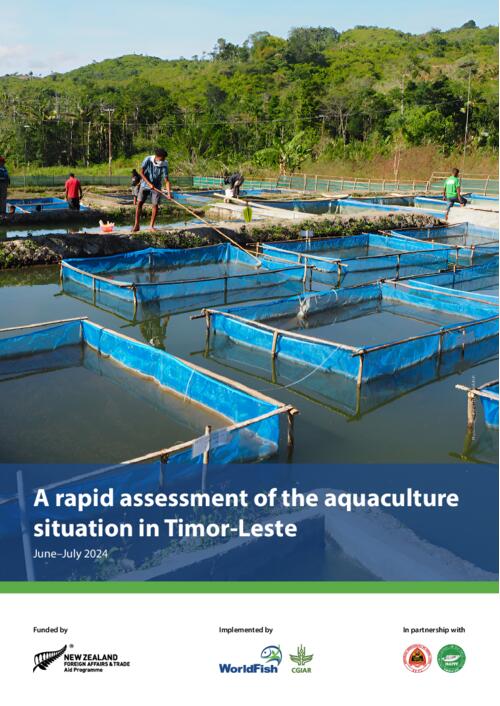
This report presents the findings of a rapid assessment to determine the current status of the aquaculture sector in Timor-Leste. A survey was conducted to (i) gather relevant information and capture a snapshot of data on existing aquaculture production and practices, (ii) assess the challenges and opportunities within the sector and (iii) provide actionable recommendations for its sustainable development. The methodology involved a combination of field visits, stakeholder consultations and interviews, and analyses of data or information from secondary sources. Key stakeholders consulted included local fish farmers, community leaders, government officials and representatives from relevant national and international non-governmental organizations. The assessment covered various aspects of the aquaculture sector, including production systems and their productivities, species farmed and available resources. The results of the assessment revealed that there were 2846 farmers (29% women) involved in aquaculture who were organized into 202 farmer clusters. Combined, they had 4515-unit ponds with a total area of 647,655 m2 (approximately 65 ha). Together, they produced 598,883 kg of fish (close to 600 t), for an average pond productivity of 10.7±3.7 t/ha. Using improved technologies tested by the Partnership for Aquaculture Development in Timor-Leste Phase 2 project, the sector has the potential to enhance the productivity of the farms, which use traditional practices, by more than 60%. The findings indicate that while Timor-Leste possesses significant natural and climatic advantages for aquaculture, the sector is still in its early stages of development. Major constraints include limited technical knowledge, inadequate infrastructure and insufficient access to quality inputs and markets. Despite these challenges, however, there are notable outputs and opportunities for growth, particularly through the adoption of improved farming practices, capacity building, public and private partnership initiatives, marketing efforts and the development of supportive policies and investment frameworks. To achieve this, a coordinated approach is needed that involves all stakeholders to address existing gaps and leverage the country’s favorable resource base and socioeconomic conditions to fully realize its aquaculture potential.