
Mavindu Muthoka
Douglas Okemwa
Markose Zewdie
Esther Magondu
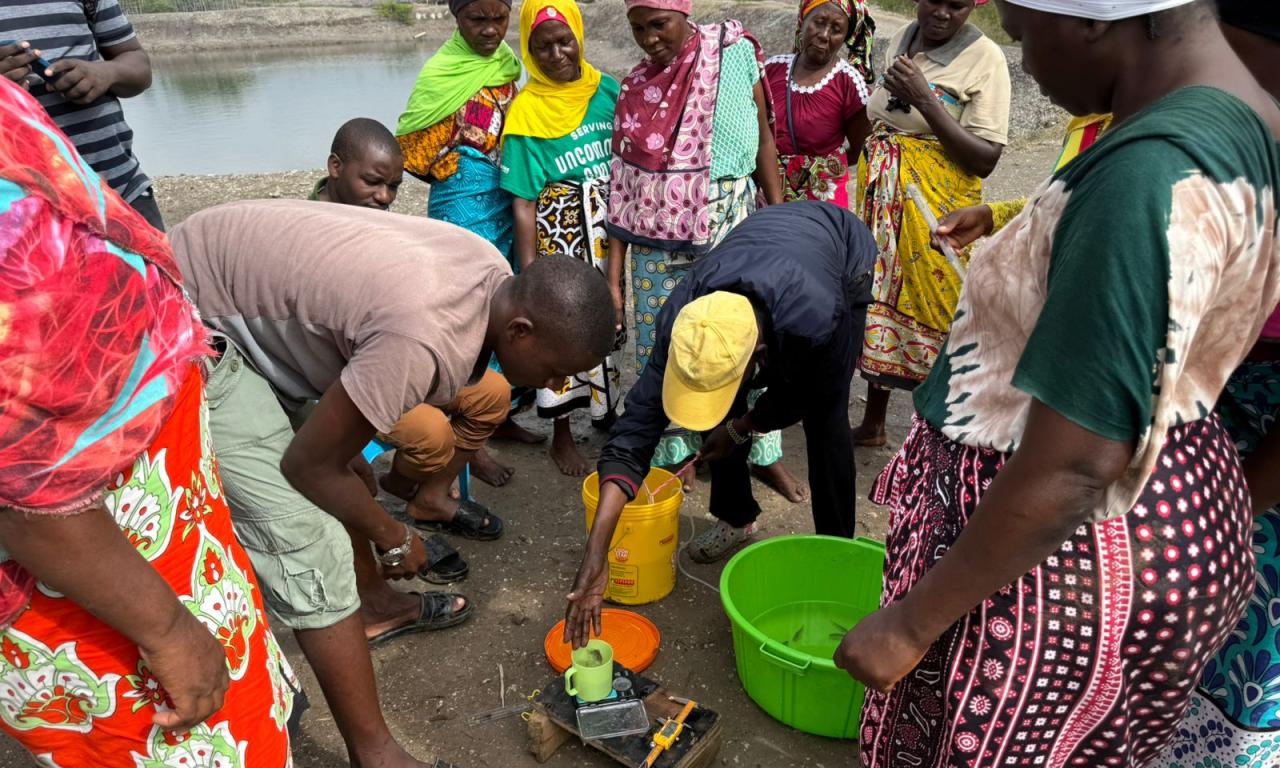
In September 2025, coastal farmers in Kwale and Kilifi Counties participated in a hands-on training and first-round sampling exercise in managing pond-based Integrated Multi-Trophic Aquaculture (IMTA). The Asia–Africa BlueTech Superhighway (AABS) project, supported by county fisheries offices, organized these sessions to empower the farmers with new knowledge and practical skills to run IMTA systems independently.
Farmers at the Centre of IMTA Pilots
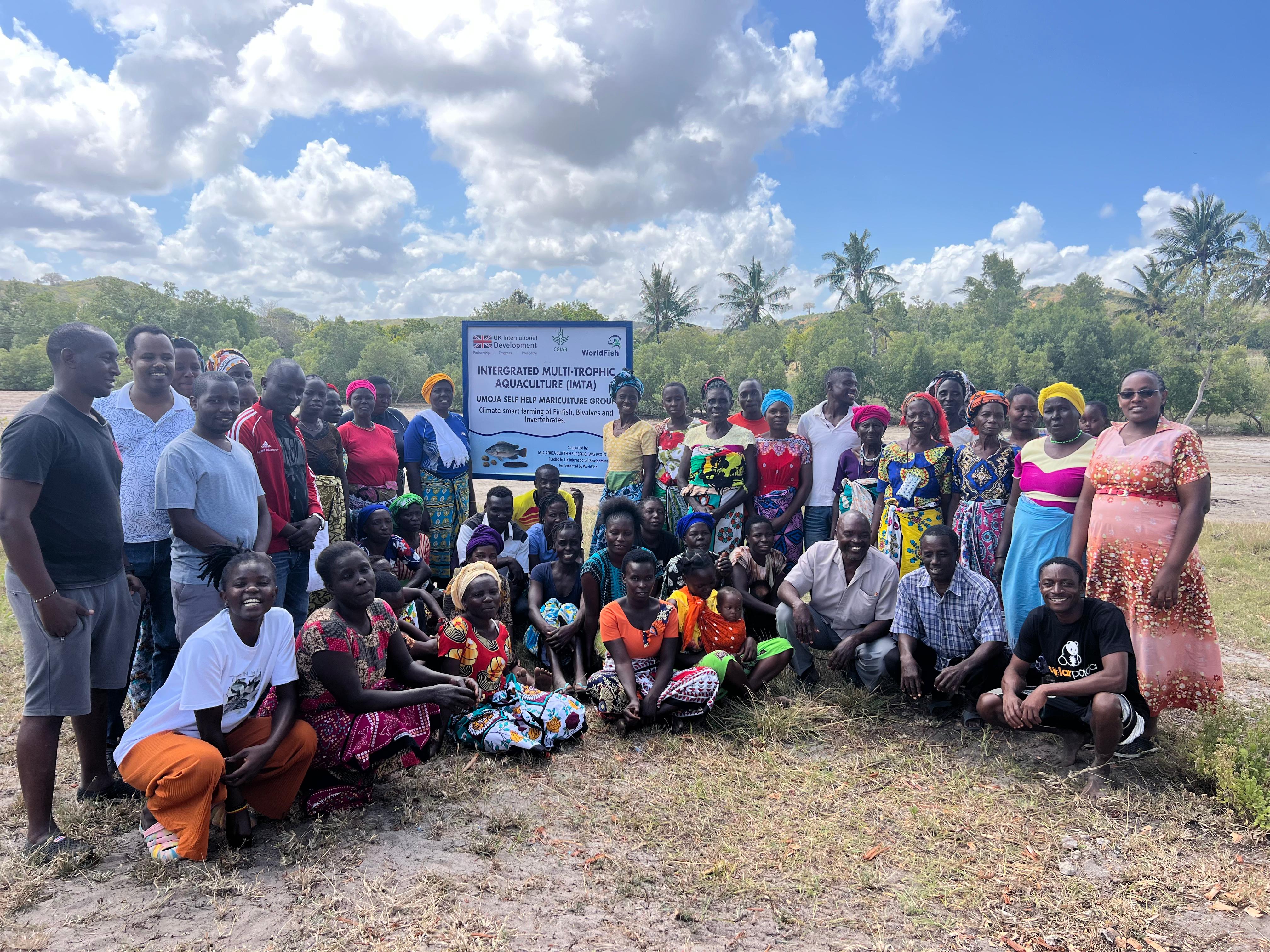
AABS is focused on piloting pond-based IMTA practices, with three community sites selected for implementation: Tsunza Fish Farming Group in Kwale County, Kwetu Training Centre in Kilifi County, and Umoja Self-Help Group in Kibokoni, Kilifi County. These pilots integrate tilapia as the main fed species, with extractive organisms such as sea cucumbers and gastropods that help recycle waste, stabilize water quality, and provide additional harvests, fostering a balanced ecosystem in each pond.
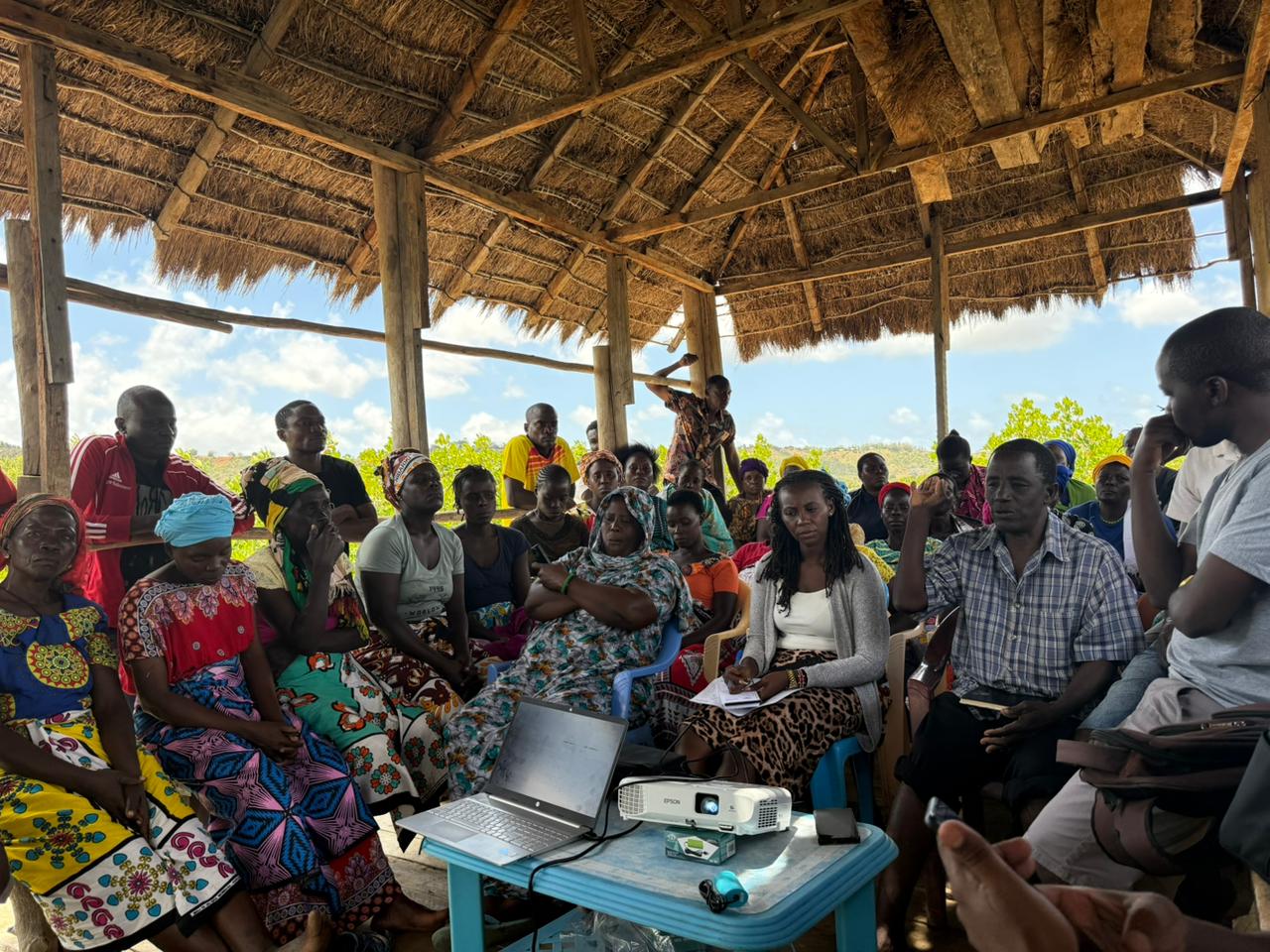
Training Leadership, Support, and Follow-Up Plans
The training engaged a total of 85 farmers, including 55 women and 30 men. It was led by the Asia–Africa BlueTech Superhighway (AABS) project in close collaboration with the Kwale and Kilifi County Fisheries Offices and the leadership of Tsunza Fish Farming Group, Kwetu Training Centre, and Umoja Self-Help Group. County fisheries officers participated as government technical representatives and local influencers to strengthen ownership and continuity beyond the training days. The training was organized to support the transition from monoculture to pond-based IMTA and to help farmers improve sustainability, reduce feed wastage and costs, and increase resilience to climate variability through better water quality and feeding decisions. AABS also provided technical backstopping, standardized sampling guidance and tools, and the IMTA pilot setup already stocked with the required seed at the sites. Follow-up is built into the pilot through monthly sampling revisits, and on-site advisory support coordinated through the site managers and county fisheries officers, who serve as the first point of contact when farmers face operational challenges.
First-Round Sampling: Data That Guides Better Farming
The four-day training combined field-based practical demonstrations on sampling and data collection with interactive learning sessions. During the first-round sampling, farmers worked alongside the WorldFish team and county fisheries officers to collect data from 12 IMTA trials that were already established across the three pilot sites, based on four pond configurations at each site. The setup was consistent across all sites, with Pond 1 stocked with marine acclimatized tilapia together with sea cucumbers and gastropods, Pond 2 stocked with marine acclimatized tilapia together with sea cucumbers, Pond 3 stocked with marine acclimatized tilapia together with gastropods, and Pond 4 stocked with marine acclimatized tilapia only and used as the control. Each session started with checking water quality by measuring temperature, dissolved oxygen, pH, and oxidation–reduction potential at the inlet, middle, and outlet of the pond. This was followed by gentle seining to collect tilapia, sea cucumbers, and gastropods for measurements. Farmers handled the animals carefully to reduce stress by using wet hands for tilapia, keeping sea cucumbers moist, and lifting gastropods gently.
Captured sample species were sorted into aerated basins, weighed, and measured, with results recorded immediately in field notebooks. This activity aimed to establish a monthly baseline dataset on growth and water quality. With this information, farmers can adjust rations based on real biomass, detect early warning signs of stress, and track long-term performance across different pond configurations. By actively leading the sampling process, farmers gained confidence and independence to continue the work in the coming months.
Training Modules: Building Skills for Independence
Following sampling, participants engaged in a series of five training modules that were practical, interactive, and directly tied to the needs of IMTA farmers. In the water quality module, farmers learned how to conduct simple early morning and late afternoon checks (AM/PM observations) when pond conditions often change most, interpret pond conditions, and apply low-cost corrective actions. The feed and feeding module focused on tilapia as the only fed species, teaching participants how to ration based on biomass, divide feed into morning and evening meals, and avoid waste that could harm pond balance. In pond management, trainers emphasized the importance of daily cleaning, sediment control, and the use of tidal water exchange to stabilize conditions. Through the species handling and health modules, farmers practiced gentle techniques for tilapia, sea cucumbers, and gastropods, gaining confidence in monitoring health and reducing stress. Finally, the full IMTA operations module tied the system together, showing how each species plays a role—tilapia as the driver of feed, sea cucumbers as bottom cleaners, and gastropods as surface grazers—creating a balanced pond where waste is recycled into value.
Early Outcomes and Next Steps
The immediate results were encouraging for participating farmers and project stakeholders. Farmers began adopting AM/PM water checks, recalibrating rations weekly, and spreading feeding points more evenly. Practical fixes were also implemented—timed tidal exchanges reduced dawn oxygen dips, while ration trims and light cleaning prevented overfeeding and silt build-up. These changes stabilized pond conditions and gave participants confidence that IMTA could work in their context, supporting food security, livelihoods, and climate resilience.
Looking ahead, monthly sampling and continued farmer-led monitoring will generate the evidence needed to refine operations and demonstrate IMTA’s advantages over monoculture: better growth, lower feed costs, and healthier pond environments. With strong participation, gender inclusivity, and support from county fisheries officers, these pilots are laying the foundation for climate-smart aquaculture that can be scaled across coastal Kenya. With continued training and support, IMTA is set to transform coastal aquaculture into a resilient and sustainable livelihood for Kenyan communities.
Cover photo: Farmers at the Tsunza IMTA pilot site, Kwale County participate in a hands-on training on measuring and recording length–weight data for cultured IMTA species. Photo: Esther Magondu/WorldFish.