
Pascal Thoya

In Zanzibar, small-scale fishers are entering the digital era. Previously reliant on delayed reports from handwritten logs, they now benefit from near real-time information processed and displayed on decision dashboards. These tools are reshaping how marine resources are monitored, managed, and conserved.
Through the Asia-Africa BlueTech Superhighway (AABS) project led by WorldFish and funded by the UK Government, digital innovation is strengthening community empowerment, improving decision-making, and supporting sustainable fishing across the islands of Zanzibar.
Closing the Data Gap in Zanzibar’s Fisheries
Until recently, fisheries data in Zanzibar were collected manually on paper at landing sites, then sent to government offices for transcription and analysis, a process that often took months. The delays, combined with frequent data loss, left fisheries managers without timely insights and fishers without feedback to guide sustainable practices. Furthermore, the data entered the government database, but information rarely returned to fishers and communities.
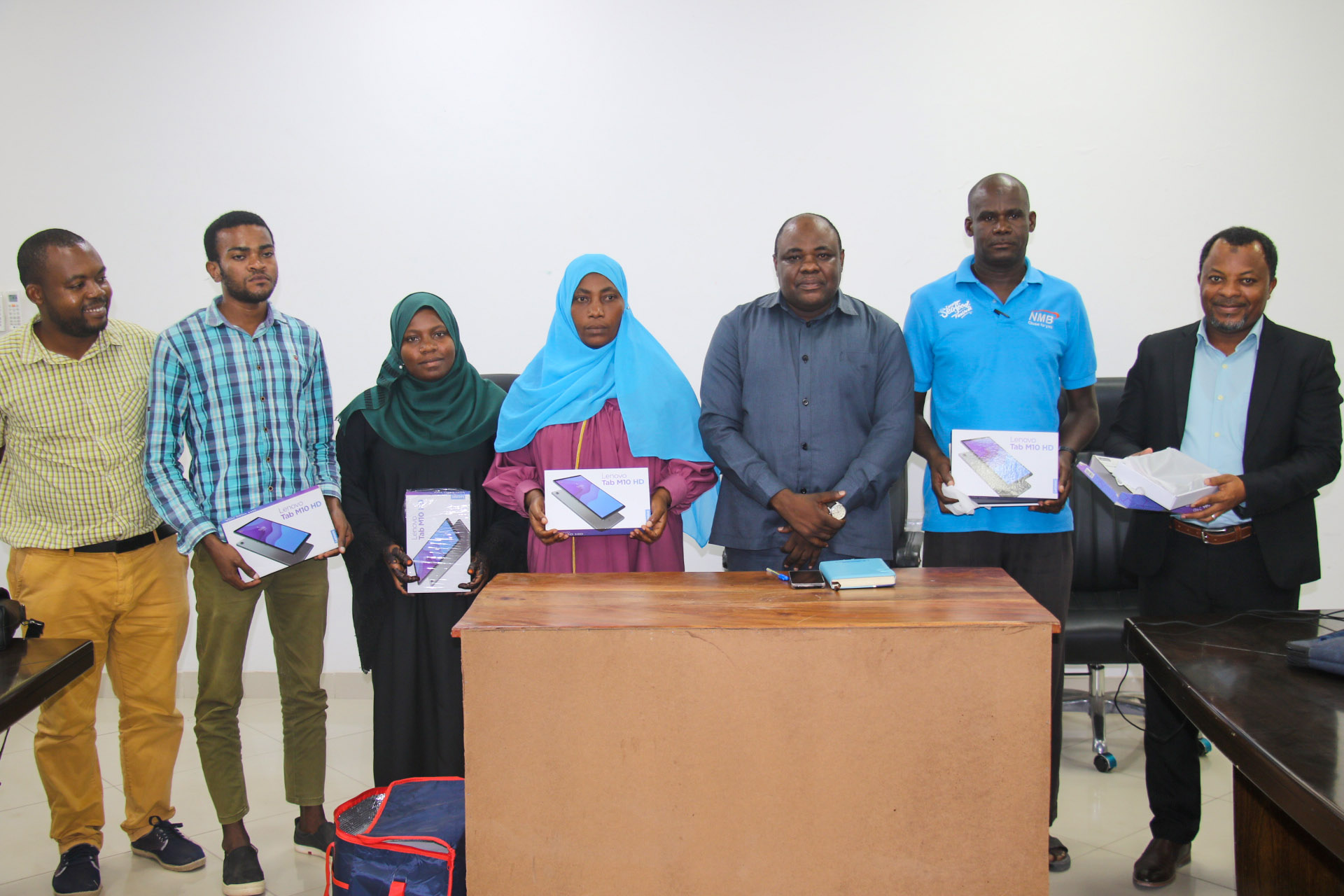
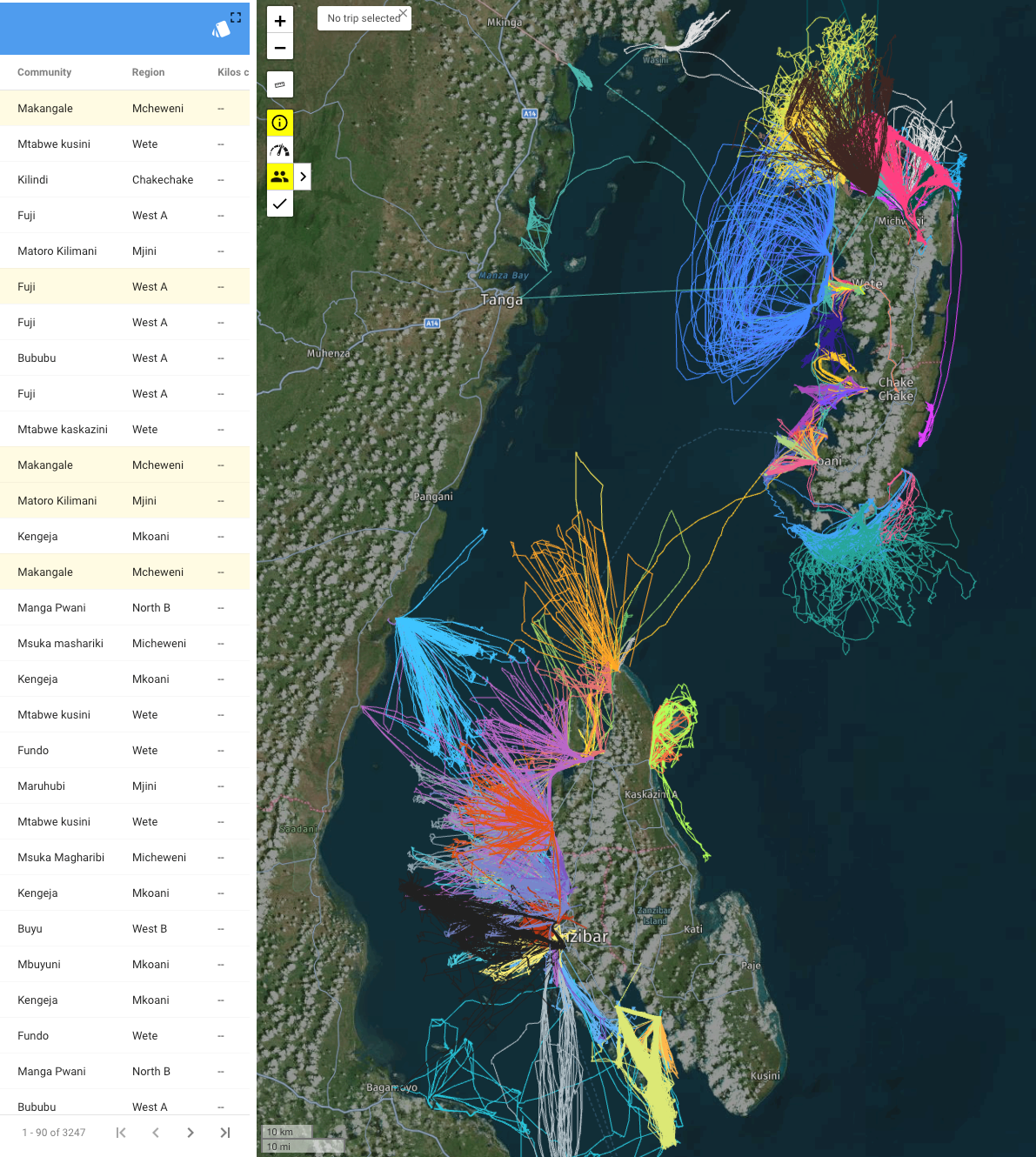
AABS has changed this by introducing a digital, real-time monitoring system. Using tablets and phones at landing sites and GPS trackers on boats, data is instantly uploaded to the cloud where it is automatically processed, analyzed, and displayed on a dashboard. This provides live insights into fish catches, species, and fishing zones, enabling smarter and faster management decisions. This dashboard and the Tracks app also allows fishers and traders at community level to see and use the data, creating new business insights and a more inclusive management of the fisheries sector.
At the heart of this system is Peskas, an open-source software developed by WorldFish in 2017. By integrating Peskas modules into Zanzibar’s existing SamakIS government system, fisheries data is now automatically validated, analyzed, and visualized. The result is a SamakIS dashboard that delivers timely, transparent, and accessible information to fishers, traders, and managers alike.
This transformation allows:
- Managers to set catch limits, define fishing zones, and protect species based on real-time evidence.
- Communities to engage directly with data, fostering stewardship of marine resources.
- Regional partners to align monitoring systems across East Africa, creating opportunities for south-south learning and shared fisheries governance.
Because Peskas is being embedded into government systems and leverages existing enumerator networks, the end of the AABS project will present no sudden expenditure on the national budget. Rather, Zanzibar’s fisheries will continue to benefit from real-time monitoring well beyond the project’s lifespan.
Technology in Action
The Peskas system compiles, validates, and analyzes field data, transforming it into visual dashboards accessible to fisheries managers and stakeholders. Some of the information displayed is:
- Which and how much of each species is caught in which habitat and using which gear type
- How much effort (time) was taken on each trip
- Where fishing took place
These insights support transparency, strengthen enforcement against illegal, unreported, and unregulated (IUU) fishing, and improve safety at sea.
Stakeholder Engagement
From its launch, AABS has prioritized community participation and trust-building. A series of consultations with fishers, community leaders, NGOs, and government officials explained how digital tools work, what information they collect, and how it would be used. A guiding principle of WorldFish is that stakeholders should be central in the design of interventions, to ensure comprehension and ownership of the tools they will use.
Importantly, fishers were assured that tracking devices are not used for surveillance, but rather as a research tool to map fishing zones and activities over a finite period of time.
“The tracking devices are not meant to check what fishers are doing or catching. They help us identify fishing areas and understand the health of our ocean. The data is accessed only by authorized personnel within the Ministry." — Dr. Zakaria Khamis, Director, Zanzibar Fisheries and Marine Resources Research Institute.
To strengthen dialogue, the project launched the Fishers’ Forum - a participatory platform where fishers, government representatives, and experts exchange knowledge, raise concerns, and co-design solutions.
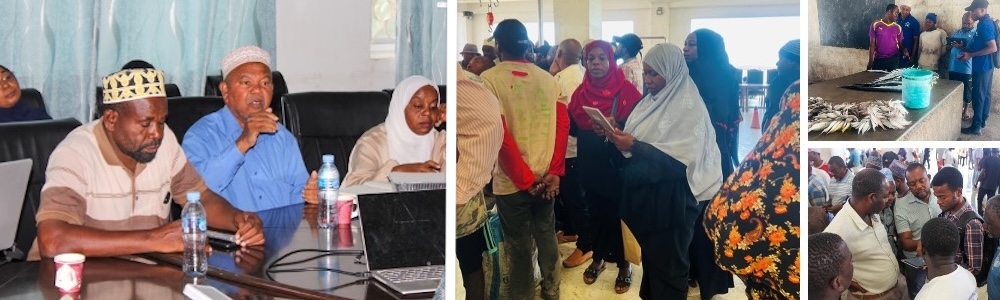
During the 2025 fishers’ forum, Omar Moh’d Ali, Chairperson of ZASFICU, emphasized the importance of mapping fishing areas:
“Fishers are interested in identifying areas for Fish Aggregating Devices (FADs). Understanding fishing grounds is crucial for our work.”
A web app called “Tracks” was also developed by WorldFish to empower fishers with data, allowing boat captains to view their own vessel movements and report catch - enhancing transparency, empowerment, and ownership among fishers.
Empowering Enumerators
Data quality begins with the people collecting it. The project has trained government enumerators on using the KoboCollect app (the information entered here is automatically uploaded to Peskas), fish measurement techniques, and species identification. To support their work, a Fish Identification Guide was created tailored to Zanzibar’s fish species, improving accuracy in recording species at landing sites.
A Smarter Way to Monitor
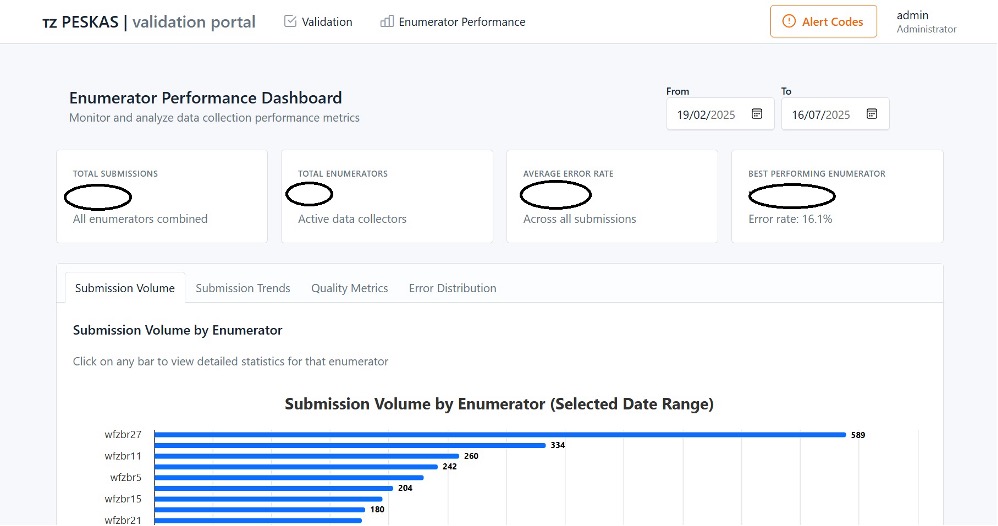
High-quality data is the backbone of effective fisheries management. One of the Peskas modules, the validation portal, is focused on improving data quality by providing a streamlined process for checking potentially erroneous data submissions completeness, consistency, and errors against predefined indicators.
By evaluating the type and frequency of errors, we can identify where misunderstanding or incorrectly worded survey questions can be rectified through more training or adjustment. Additionally, immediate feedback enables enumerators to correct mistakes on the spot, sharpen their skills, and maintain data integrity. Over time, this system has driven measurable improvements in accuracy and fostered a culture of accountability and continuous learning in the field.
Accomplishments to Date
AABS is transforming Zanzibar’s fisheries sector into a model of digital innovation. By embedding Peskas into government systems, empowering fishers with access to their own data, and ensuring inclusive participation, Zanzibar is not only improving fisheries management today but also laying out the foundation for long-term sustainability.
This work demonstrates how digital tools can bridge data gaps, foster accountability, and drive community-led stewardship of the ocean - setting a global precedent for small-scale fisheries.
Cover photo: Fish market in Zanzibar. Photo: Dilruba Sharmin/WorldFish.