
Anthony Langat
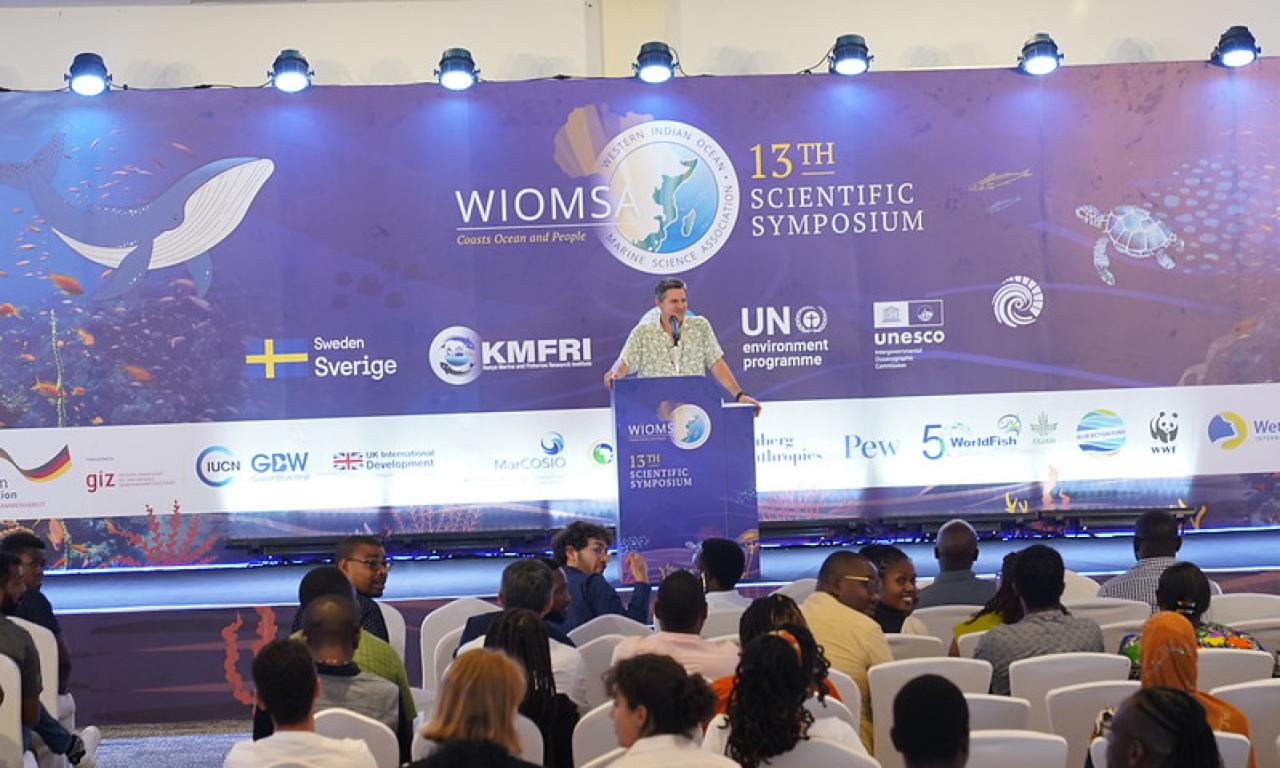
We all need information to make decisions, and this is true for coastal fisheries – only the information is very hard to obtain. Fish are ‘invisible’ and moving around, often across national maritime boundaries, so we rely on fishers to get data on how much fish is being caught and where and when. At community level this is challenging. At national level this is extremely difficult. At the regional level, what can be done to support countries and governments to make good decisions?
This is the situation which countries in the Western Indian Ocean region find themselves in. During the 13th Western Indian Ocean Marine Science Association (WIOMSA) Symposium held in Mombasa, Kenya in October, stakeholders deliberated on how to address this issue. WIOMSA is the region’s leading platform for advancing marine and coastal science and policy.
On the final day of the symposium, scientists, government fisheries officials, NGO representatives, community members and private sector actors gathered to discuss how to harmonize small-scale fisheries data systems in the region. One solution that was put forward is to have all fisheries collect the same information. This avoids the present scenario where one place calls a fish one thing and measures it by weight and in another place, data is collected in a different language, with different units and names.
One of the key sessions of the symposium, titled “Fisheries Data Harmonization in the WIO – Building a Regional Data Ecosystem” was led by Alex Tilley, Senior Scientist at WorldFish, and Leopold Marco of IRD. The session drew participation from stakeholders representing nearly all countries in the Western Indian Ocean (WIO), underscoring its strong relevance to the region’s current data and management challenges.
Emmanuel Mbaru, a WorldFish scientist based in Mombasa, Kenya opened the session by outlining the challenges facing small-scale fisheries in the region, the importance of small-scale fisheries, and emphasized why reliable data and its harmonization are essential for effective management.
Mbaru shared the findings from the Asia–Africa BlueTech Superhighway (AABS) project which conducted a to understand stakeholders’ perspectives on the harmonization of small-scale fisheries data systems across the WIO region. One of the key responses highlighted that such harmonization is crucial for informed decision making. “Decision makers are faced with the responsibility of managing resources sustainably, but the data isn’t coming in a way that can help them deliver their responsibilities,” he said.
The survey also found issues with the current data collection systems in the WIO region, including limited accuracy, inadequate resources, and fragmented datasets resulting from multiple actors such as NGOs and government agencies, collecting data independently. The study called for the development of harmonized data collection guidelines across the region. Mbaru urged participants to work towards producing an output that could be replicated in other regions.
Other speakers shared their experiences and findings from different countries across the region. The described the challenges of small-scale fisheries data collection as substantial - ‘huge’ in the words of a representative from Madagascar, and ‘fragmented’, as noted by a Tanzanian speaker, with multiple fisheries institutions undertaking their own data collection activities.
Overall, the speakers’ experiences in the session pointed towards a similarity of challenges which were aptly captured by Sam Petterson, the SWIO Regional Programme Lead at WWF. She said, “we share similar challenges even though contexts are different across different organizations - be they challenges of data deficiency, stock assessment capacity.”
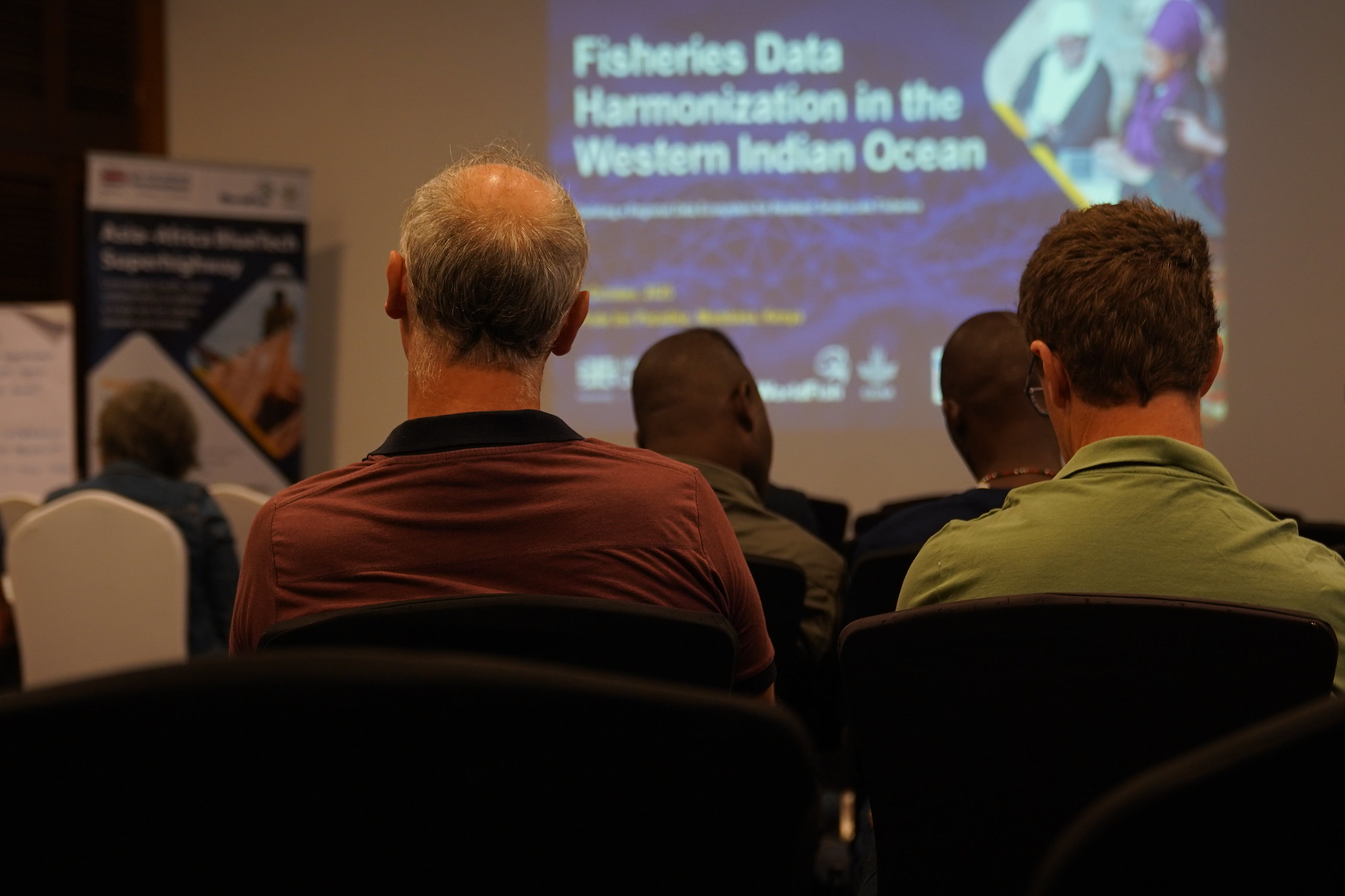
Speakers celebrated the initiative to seek harmonization of small-scale fisheries data in the region, saying that it would ensure comparability of data across time, locations and between institutions.
“The goal is to make the data speak the same language and have common variables of interest that objectively inform the goals that you want to drive,” said Jesse Kosgei, a marine biologist at WCS. According to him many institutions collect the same data, creating fatigue in the communities.
The session also provided a platform for scientists and other stakeholders to share what was being done in their specific countries in the space of small-scale fisheries data systems. Despite the challenges in small-scale fisheries data collection, many countries across the region are already working towards a solution. Jamal Mahafina, a professor and researcher at the University of Toliara in Madagascar said that he is working on a bottom up collaboratory approach through digital data collection, online databases, automated statistical modelling, visualization tools and publications to improve data cycles. He said that he welcomes collaboration within the region to harmonize small-scale fisheries data.
In Tanzania, Zahour El Kharousy, the Deputy Principal Secretary at Tanzania’s Ministry of Blue Economy and Fisheries said that the government of Tanzania has started working on harmonizing its data collection. “We have just started a project that is aimed at harmonizing the three current databases and that could be an opportunity for integration of data that is collected by NGOs and other organizations,” said El Kharousy.
As one of the countries where AABS is being implemented, Tanzania has started benefiting from the Digital Coasts Work Package. Digital Coasts is working towards enabling all fisheries’ stakeholders to have access to and the capacity to use data to make informed, nature-positive decisions for a sustainable, resilient and equitable future. In Zanzibar, over 100 small-scale vessels are now equipped with GPS trackers, backed by real-time data collection and oceanographic monitoring in collaboration with Tanzanian research institutions. Similar activities are ongoing in the other countries under AABS in the WIO region.
Regionally, NGOs under the Western Indian Ocean Consortium formed a working group earlier this year, to advocate for the harmonization of small-scale fisheries data across the region, according to Petterson.
Marco showed that the WIO has one integrated database at the regional level. “It is obvious that we have a nice institutional setting at the regional level in the WIO which I would say is a good thing as we don’t find this in every region,” he said, in reference to WIOFish, the Western Indian Ocean (WIO) Fisheries Database that provides access to data and information on hundreds of fisheries in the WIO region. He added, however, that the problem of collecting, aggregating and harmonizing the data is at the national level.
Dr. Tilley closed the session by inviting government representatives from the Western Indian Ocean to join in the discussion and learn from the AABS outputs and innovations.
“It is a real opportunity to come together as a region to find the best approach going forward,” he said.
Building on the outcomes of this key session, Dr. Mbaru said that a policy brief with recommendations on harmonization of small-scale fisheries data in the WIO region will be submitted to WIOMSA in days to come. WIOMSA will then present the recommendations to the Nairobi Convention and the South West Indian Ocean Fisheries Commission. The recommendations will then form part of the deliberations in the next COP to the Nairobi Convention.
Cover photo: Dr. Alex Tilley, Senior Scientist at WorldFish, speaks to regional stakeholders about the need for harmonized small-scale fisheries data at the 13th WIOMSA Symposium in Mombasa, Kenya. Photo: Anthony Langat.