
Shafiq Rheman

Sabrina Hossain
Abdullah-Al-Mahmud
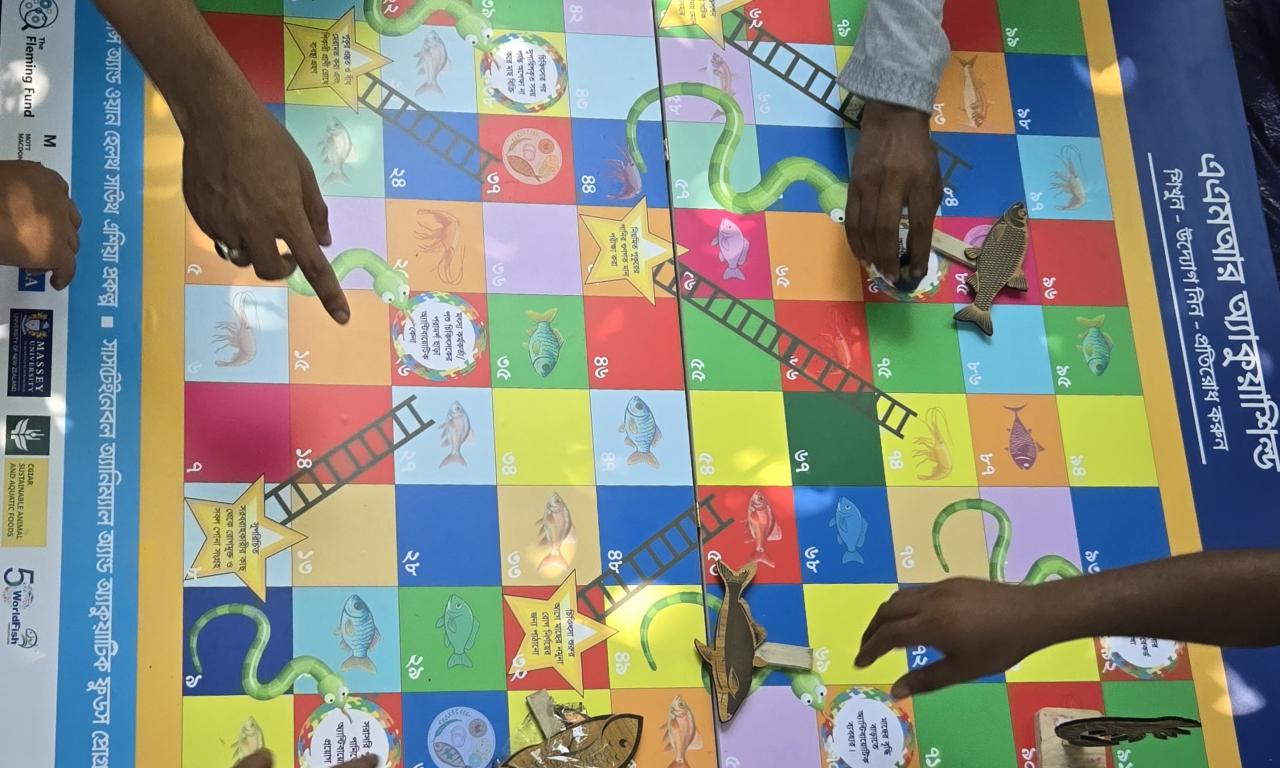
- Designed, developed and implemented the AMR AquaShield Snakes and Ladders learning game to promote antimicrobial stewardship in aquaculture.
- Potential for scale-up and redesign to integrate into training modules and extension programs, embedding broader circular One Health themes that link livestock, fish, crop systems and human health.
Antimicrobial resistance (AMR) is a global public health threat, often driven by the irrational and excessive use of antimicrobials. In aquaculture, inappropriate and excessive antimicrobial use (AMU), frequently linked to limited awareness and restricted access to veterinary advice, contributes to the spread of resistant bacteria, affecting the health of organisms across the food chain.
To raise awareness and encourage responsible practices among fish farmers, aquatic animal health practitioners and agrovet medicine sellers, WorldFish in collaboration with Massey University, developed AMR AquaShield, Snakes and Ladders game for antimicrobial stewardship (AMS). The game was implemented as part of the Practitioner Engagement Program (PEP), supported by the UK aid-funded Fleming Fund AMROH-SA project and CGIAR’s Sustainable Aquatic and Animal Foods (SAAF).
Turning Learning into Play
The idea was simple yet powerful: to transform AMS messages into an interactive experience. The AMR AquaShield - Snakes and Ladders game uses a familiar, playful format to engage participants, stimulating discussion and decision-making around daily farm management, and medicine prescription and selling practices based on local scenarios.
Some squares on the board represent real-life choices a farmer might face, such as biosecurity, proper dosing, record-keeping, and avoiding unauthorized antibiotics or dispensing without a prescription, in line with the relevant national laws, guidelines, and good aquaculture practices. Just like in the classic game, players roll the dice, but the lessons come through the consequences:
- Get bitten by a snake when you make a poor decision, like using leftover antibiotics, skipping proper pond preparation, or ignoring recordkeeping, issuing unauthorized antibiotics in aquaculture.
- Climb a ladder when you adopt good practice, such as maintaining biosecurity, following withdrawal periods or consulting a practitioner before using medications including antibiotics.
Playing the Game in the Field
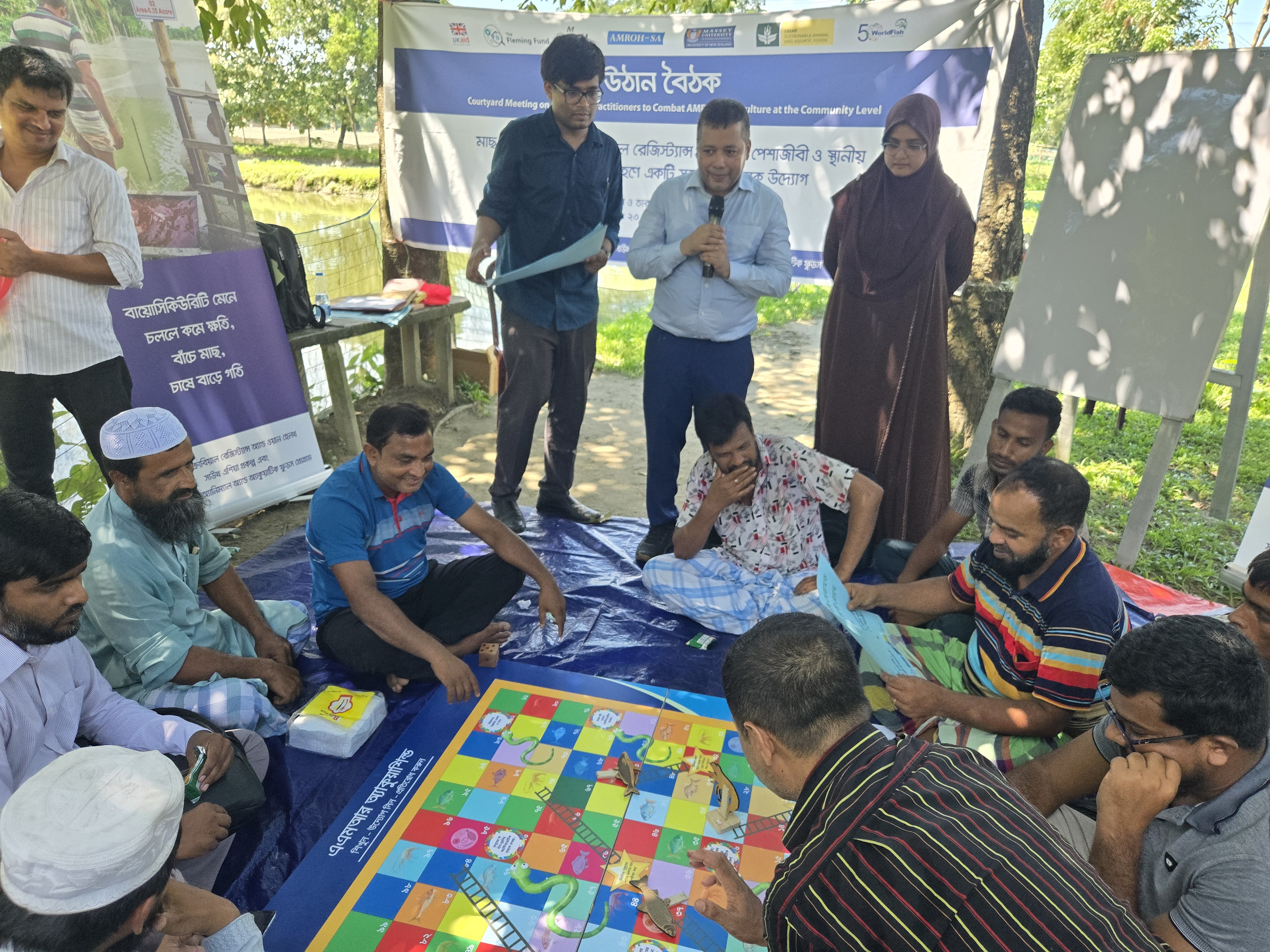
The AMR AquaShield Snakes and Ladders game was piloted with fish farmers communities and practitioners in two Upazilas of Mymensingh district, as a dedicated session within the implementation of PEP. The colorful board, featuring various fish species and the familiar snake and ladder themes, immediately caught participants’ attention. As players took turns rolling dice, laughter and friendly competition filled the room. But beneath the fun, serious conversations naturally unfolded as the game progressed. When a player landed on a snake for a “bad practice,” they read aloud the reasons, sparking discussion on why it occurs and what safer alternatives could be adopted. Conversely, when a player climbed a ladder for a “good practice,” the group reflected on how simple changes could prevent disease and reduce the reliance on antibiotics.
Next Steps: Scaling Up the Fun
Mr. Muhammad Foridul Islam, Senior Upazila Fisheries Officer, Department of Fisheries, Fulbaria, Mymensingh remarked
“The interactive learning session on AMS in aquaculture was very informative. Farmers enjoyed the AMR AquaShield Snakes and Ladders game, which made good and bad aquaculture practices learning both engaging and practical. The information shared on the containment of AMR in aquaculture is highly practical and insightful for fish farmers at all levels.”
Encouraged by positive feedback, the AMR AquaShield game has the potential to enhance and integrate into training modules for fisheries officers, farmer field schools, and extension programs. There is also scope in developing similar games to connect broader One Health themes, promoting a circular One Health approach that links livestock, fish, and crop systems and human health.