
David Wardell
Fisheries management usually focuses on how much can be caught sustainably. But in Timor-Leste, where nearly half of children under five are stunted and anemia is common among women of reproductive age, the question is not just how much fish is caught, but which fish and what nutrients they provide. Simply put, how does a fishery deliver iron, calcium, and omega-3, the nutrients people need to thrive, onto the table?
A new study published in Nature Food, led by WorldFish researchers Lorenzo Longobardi, Gianna Bonis-Profumo, and an international team, starts to answer that. Using six years of catch data from Timor-Leste's small-scale fisheries, and drawing on more than 77,000 fishing trips, it connects fishing methods and habitats to the nutrient profile of what gets caught. Instead of asking how much to fish, the research links nutrient outcomes to specific fishing patterns, defined by combinations of gear, habitat and species.
The findings show that where fishers fish and what gear they use can predict the nutritional value of their catch, suggesting ways to shape fishing practices toward better nutritional outcomes.
What the Data Shows
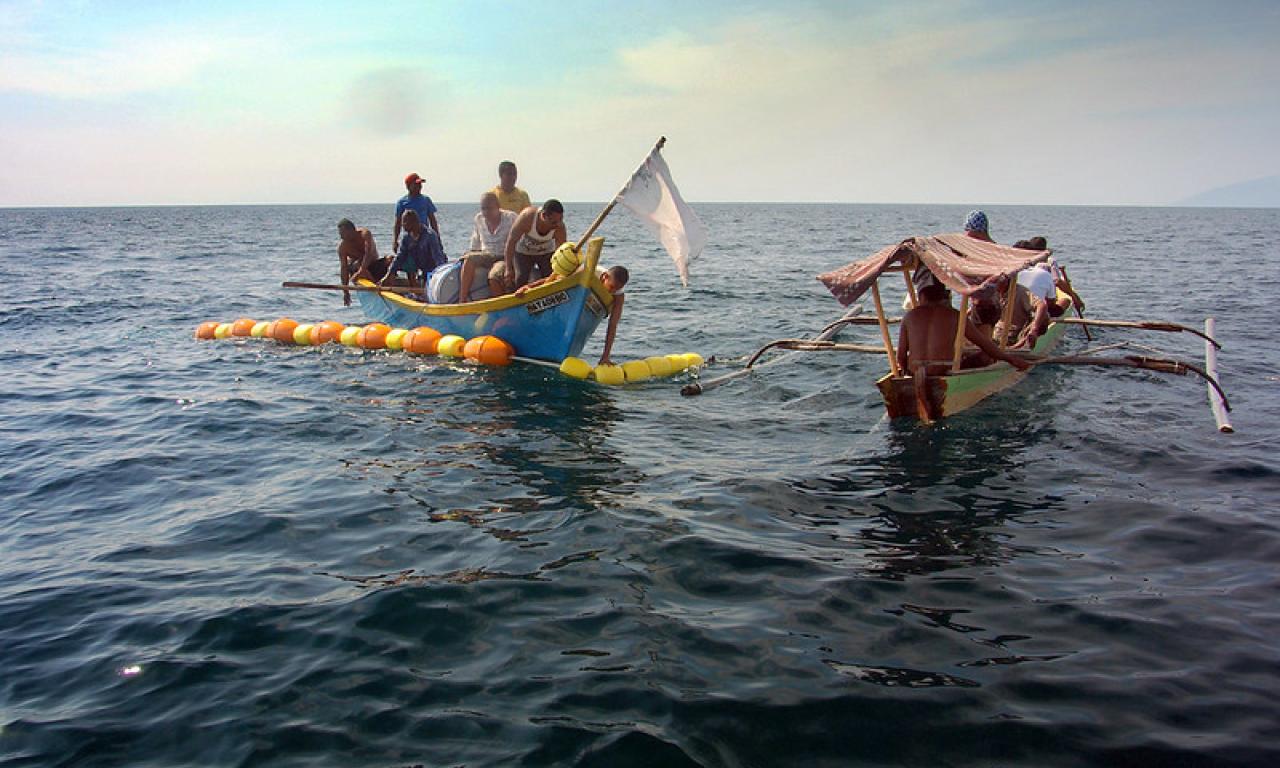
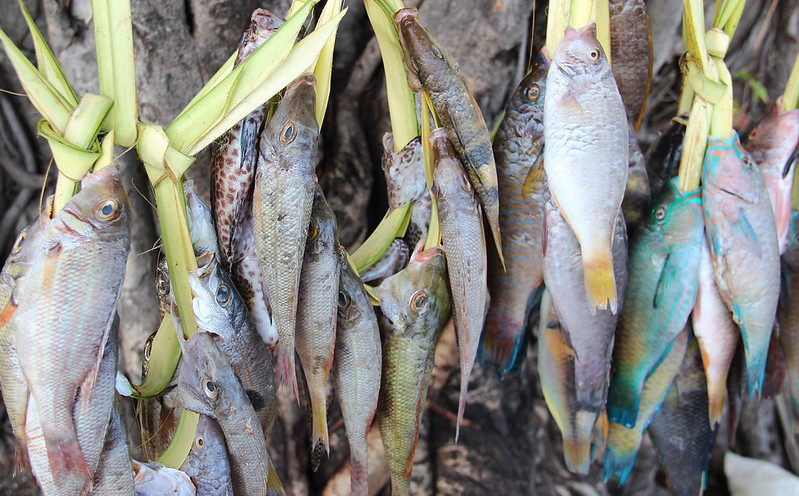
Small pelagic fish – such as sardines, mackerel, flying fish – are the most nutrient dense and among the most affordable. Fishing around fish aggregating devices (FADs) tends to produce catches higher in calcium, iron and omega-3, while fish caught in reef habitats contribute more to vitamin A. Taken together, these patterns are consistent enough to model.
The researchers identified three distinct nutrient profiles and built a machine learning model that can predict what a fishing trip is likely to produce in terms of nutrient composition, based on gear, habitat, season and vessel type.
That kind of analysis needs data that rarely exists in small-scale fisheries. The study draws on Peskas, a monitoring system WorldFish has been building with the Timor-Leste government for a decade, led by senior scientist Alex Tilley. It records fishing trips in near real time, including gear, habitat, catch composition, and landing weight, across thousands of trips.
The model is based on data from two municipalities, Dili and Atauro, and the study authors note that applying it elsewhere will require local data. The nutrient values are modeled estimates rather than direct measurements from Timorese fish, and the framework is a management guide, not a rulebook. The code, data and methods are all openly available, so the approach can be adapted and applied in other contexts. It also doesn’t solve the hard problem of getting nutritious fish to people who need it. This still depends on distribution, cold chains, prices and eating habits. But it provides useful insights for fisheries managers to promote certain combinations of gear types, mesh sizes and habitats, through capacity building as well as regulation, that could increase the nutrient yields of catches in different environments.
A Different Set of Levers
That finding matters especially in places where conventional enforcement is difficult. In Timor-Leste, regulating mesh sizes or closing reef areas is genuinely hard. The authors suggest this points toward a different set of levers: deploying FADs closer to shore, developing markets for nutrient-dense species, linking catch patterns to nutrition programs. These are incentives rather than restrictions, approaches that work with local fishing practice rather than against it.
WorldFish has been building that kind of integrated approach in Timor-Leste for over a decade, including through the Peskas fisheries monitoring system, the integration of fish and fish-based products into school meal programs, and support for women-led fish processing enterprises. This research builds on that longer effort.
Most fisheries management focuses on stock health and catch limits. This study looks at the nutritional return of fishing effort. Knowing that FAD fishing in certain seasons delivers more iron and calcium, or that reef habitats contribute more vitamin A, could shape how access and effort are allocated. That won’t fix supply chains or change eating habits on its own, but it could give policymakers evidence specific enough to act on.
Read the full paper in Nature Food
This research was supported by the Asia-Africa BlueTech Superhighway project (AABS), led by WorldFish and funded by UK International Development; by ACIAR through the Nutrition-sensitive approach to fisheries management and development in Timor-Leste and Nusa Tenggara Timur Province, Indonesia project; and by the CGIAR Aquatic Foods Initiative.
Cover photo: Local fishers in Timor-Leste check a fish aggregating device moments after heavy concrete anchors have been dropped to a depth of 300m. Photo: Dave Mills/WorldFish.